


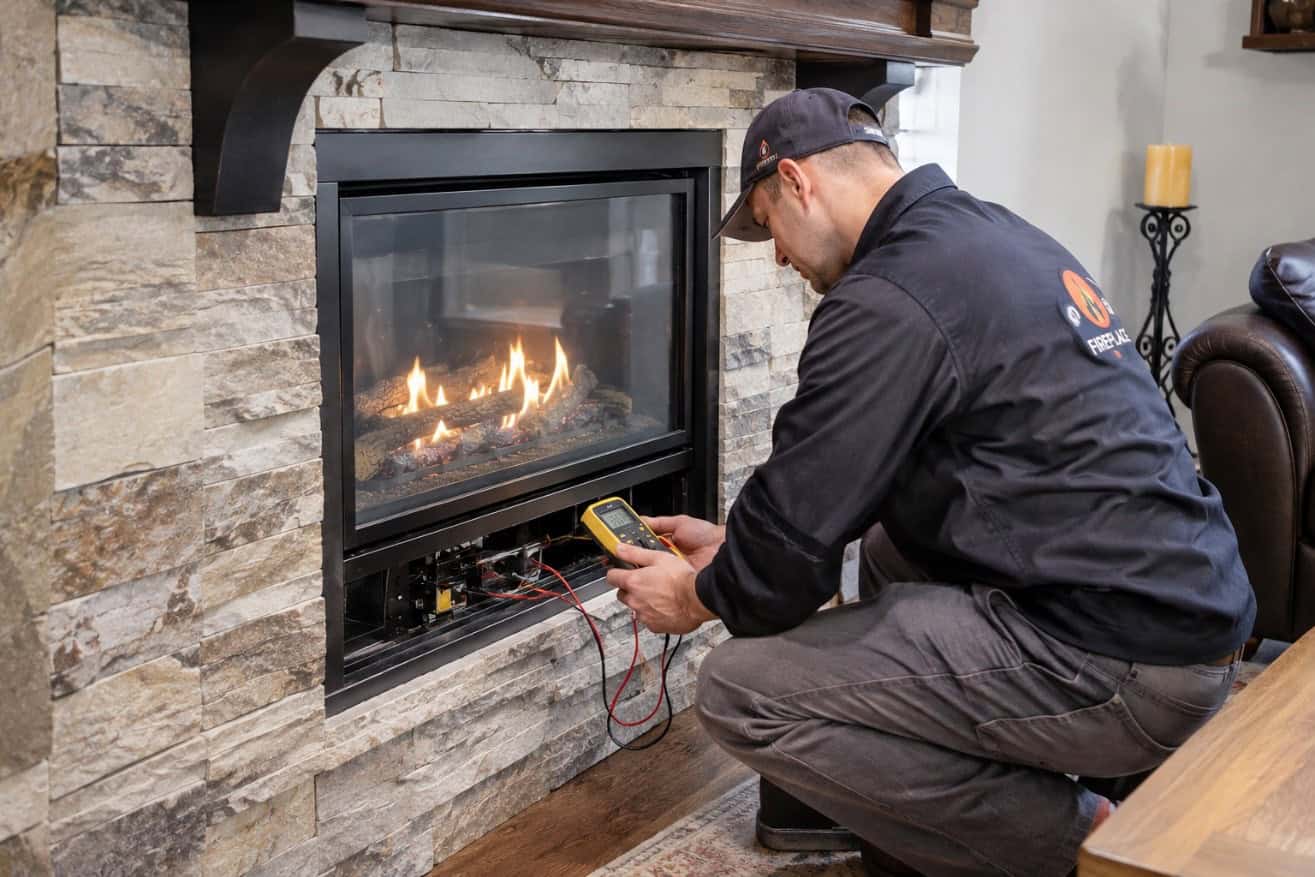
A gas fireplace adds warmth, comfort, and convenience to your home, especially during Ontario’s colder months. But when it refuses to ignite, shuts off unexpectedly, or produces an unusual flame, determining what’s wrong isn’t always straightforward. Sometimes, the issue is as simple as a dead remote battery. Other times, it involves ignition components, gas controls, or venting problems that require professional attention.
For homeowners searching for gas fireplace repair in Vaughan, understanding the most common causes of fireplace malfunctions can help prevent unnecessary repairs and identify potential safety concerns.
This guide explains why residential gas fireplaces stop working, which basic checks homeowners can safely perform, and when to contact a qualified technician in Vaughan or Thornhill for professional diagnosis and repair.
Key Takeaways: Common Gas Fireplace Problems
- Ignition problems are a common cause of fireplace failure. Faulty igniters, pilot assemblies, thermocouples, and electronic controls can prevent a gas fireplace from starting or staying lit.
- Not every problem requires a major repair. Dead remote batteries, incorrect control settings, or interrupted electrical power may explain why a fireplace isn’t responding.
- Unexpected shutdowns deserve attention. A fireplace that repeatedly turns off may have a malfunctioning sensor, gas control component, or venting problem.
- Changes in flame appearance can indicate trouble. Excessive soot, unusual flame patterns, or black deposits around the firebox should be inspected by a qualified technician.
- Professional servicing protects your home. Regular maintenance and timely repairs can help keep gas fireplaces operating safely and reliably throughout the heating season.
Why Your Gas Fireplace May Not Be Working
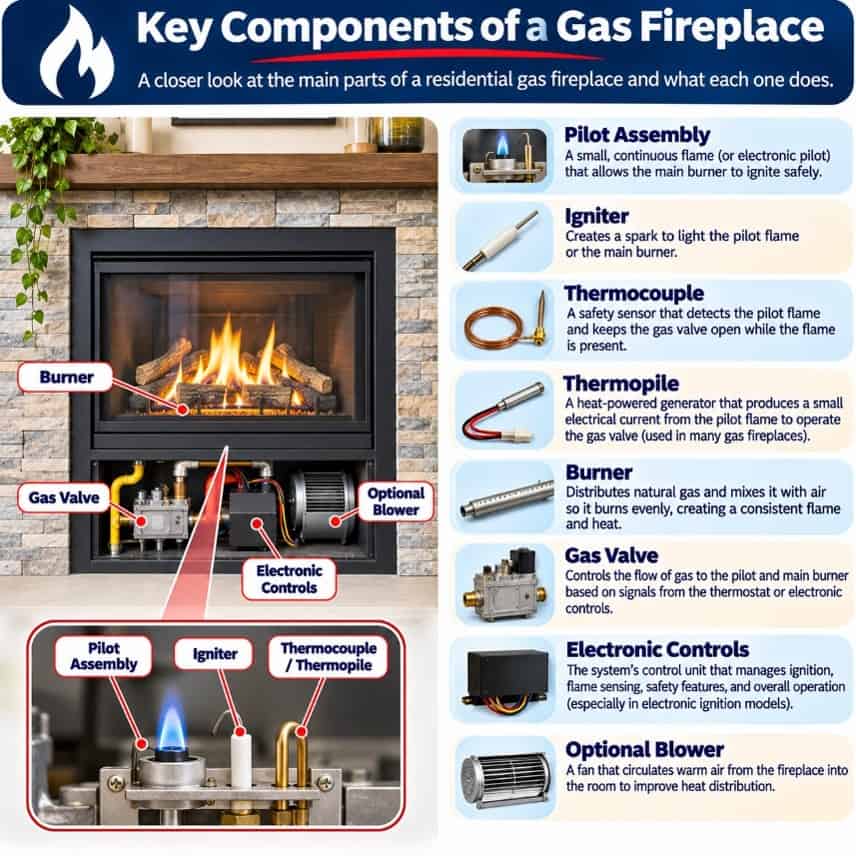
Gas fireplaces rely on several components working together to produce and maintain a controlled flame.
Depending on the model, these may include an ignition system, gas valve, pilot assembly, flame-sensing components, electronic controls, and a venting system.
When one component fails or operating conditions become unsafe, the fireplace may refuse to ignite or shut down during operation.
How Residential Gas Fireplaces Operate
Gas fireplaces generally use either a standing pilot or an electronic ignition system.
A standing-pilot fireplace maintains a small flame that helps ignite the main burner when heat is requested. Safety devices monitor the pilot flame and interrupt the gas supply if the required conditions aren’t maintained.
Newer electronic ignition systems typically light the pilot or main burner only when the fireplace receives an operating command.
Depending on the fireplace, that command may come from a wall switch, thermostat, or remote control.
Although these systems operate differently, both depend on functioning gas controls and safety components.
Why Fireplace Problems Often Appear After Months of Inactivity
Many Vaughan and Thornhill homeowners use their fireplaces primarily during colder weather.
After an extended period without regular operation, problems may become noticeable when the fireplace is started again.
Dust and debris can accumulate around components, remote batteries may weaken, and aging electrical connections or ignition parts may become less reliable.
A fireplace that worked normally the previous winter may therefore experience difficulty starting when the heating season returns.
Why Identifying the Cause Matters
Several fireplace problems can produce similar symptoms.
For example, a fireplace that clicks without igniting may have an ignition fault, insufficient gas flow, or a malfunctioning control component.
Replacing the first suspected part without testing the system may not resolve the issue.
Professional diagnosis helps determine whether the problem involves a simple component failure or a more significant operating condition.
Common Gas Fireplace Problems and Their Causes
Understanding how different fireplace components affect operation can help homeowners recognize potential problems before they worsen.
The following issues are among the most common reasons residential gas fireplaces require servicing.
1. Gas Fireplace Pilot Light Won’t Stay Lit
A standing-pilot fireplace depends on a stable pilot flame to operate safely.
If the pilot lights but goes out shortly afterward, the problem may involve the thermocouple, pilot assembly, gas pressure, or another safety-related component.
A thermocouple is a flame-sensing safety device found in many older gas fireplace systems. When it cannot confirm the required flame condition, the gas valve may shut off.
Possible causes include:
- A worn or malfunctioning thermocouple
- Dust or debris restricting the pilot flame
- Incorrect pilot flame positioning
- Problems with gas pressure or control components
- Issues affecting the fireplace’s venting or operating conditions
A pilot light that repeatedly goes out should be professionally inspected rather than repeatedly relit.
A qualified gas technician can evaluate the pilot assembly, test the relevant components, and determine whether cleaning, adjustment, or replacement is necessary.
2. Gas Fireplace Clicking but Not Igniting
Clicking sounds often indicate that an electronic ignition system is attempting to start the fireplace.
However, if the expected flame doesn’t appear, the ignition sequence may not be completing successfully.
Possible causes include a faulty igniter, damaged electrode, interrupted gas supply, or malfunctioning ignition control module.
Some systems may stop attempting ignition after detecting repeated unsuccessful starts.
If the fireplace continues clicking without lighting, avoid repeatedly activating it.
Professional testing can identify whether the problem involves the ignition system, gas delivery, or another component.
3. Fireplace Turns On but Shuts Off Unexpectedly
A fireplace that ignites successfully but shuts down after several minutes may have a problem maintaining its operating conditions.
Possible causes include a weak thermopile, malfunctioning flame sensor, faulty gas valve, or a safety control responding to abnormal conditions.
Venting problems can also contribute to shutdowns in certain fireplace designs.
Repeated shutdowns should not be dismissed as normal operation.
A technician can inspect the ignition and safety systems to determine whether the fireplace is shutting down because of a faulty component or an underlying safety concern.
4. Gas Fireplace Remote or Wall Switch Isn’t Working
Sometimes, the fireplace itself is functional, but the controls aren’t communicating with the system.
Remote control problems may result from depleted batteries, incorrect settings, or loss of communication with the receiver.
Wall switches and electronic control systems can also experience electrical faults.
Homeowners can begin by replacing accessible remote-control batteries and checking the manufacturer’s operating instructions.
If the fireplace still doesn’t respond, the problem may involve the receiver, wiring, or control module.
Internal electrical troubleshooting should be performed by a qualified technician.
5. Weak, Uneven, or Unusual Fireplace Flames
A gas fireplace’s flame appearance depends on its burner design, gas supply, combustion air, and decorative media arrangement.
Although some gas fireplaces are specifically designed to produce yellow decorative flames, changes from the unit’s normal flame pattern may indicate a problem.
Warning signs can include:
- Flames that appear significantly weaker than usual
- Flames that repeatedly lift or extinguish
- Excessive soot accumulation
- Black deposits around the firebox or glass
- Unusual burner ignition patterns
Soot accumulation can indicate incomplete combustion or problems with burner operation.
Homeowners should not attempt to adjust burner ports, move gas logs, or modify combustion controls to change flame appearance.
If unusual flame behaviour or significant soot develops, stop using the fireplace and arrange professional inspection.
6. Gas Fireplace Blower or Fan Problems
Some gas fireplaces include a blower that helps circulate heated air into the room.
If the blower stops working, the fireplace may still produce a flame but distribute less heat than expected.
Possible causes include a malfunctioning fan motor, faulty temperature sensor, damaged control, or electrical problem.
A blower that begins producing grinding, rattling, or buzzing noises may also be experiencing mechanical wear.
Professional inspection can determine whether the fan needs cleaning, adjustment, repair, or replacement.
Safe Troubleshooting Steps Before Calling a Technician
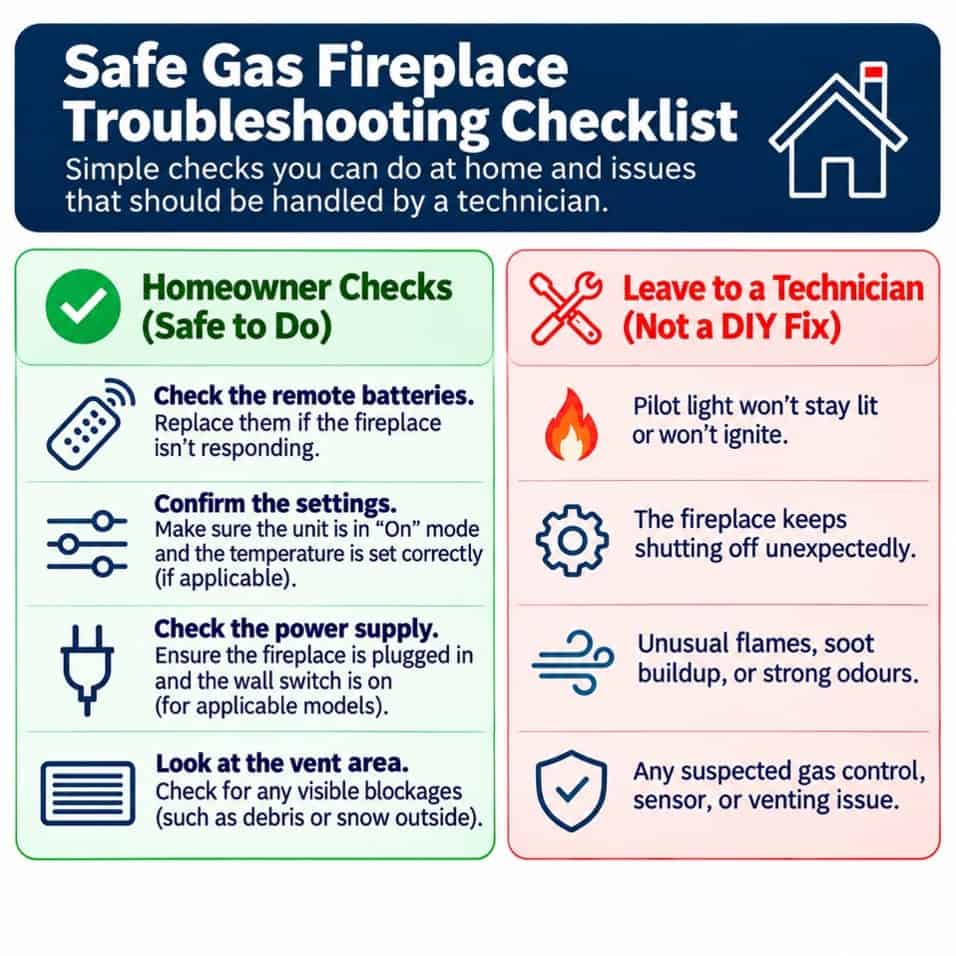
When a gas fireplace stops working, a few basic checks can help identify straightforward operating issues.
However, homeowners should only perform checks permitted by the manufacturer’s instructions and should never disassemble gas controls, bypass safety devices, or work on internal fuel connections.
Check the Remote Control Batteries
If the fireplace doesn’t respond to its remote, replace the batteries with the correct type.
Check that the batteries are installed in the proper direction and that the remote is configured correctly.
Some systems also have a separate battery-powered receiver or backup pack. Only access these components if the manufacturer’s instructions identify them as homeowner-serviceable.
If replacing accessible batteries doesn’t restore operation, the problem may require professional diagnosis.
Review the Fireplace’s Operating Settings
Confirm that the wall switch, remote, or thermostat is set to request heat.
Some fireplaces include operating modes that affect when the main burner activates.
Reviewing the owner’s manual can help determine whether a setting is preventing normal operation.
Avoid attempting to override the gas valve or safety system.
Check for an Electrical Power Interruption
Certain gas fireplaces require electricity to operate electronic ignition controls, fans, or remote receivers.
If the fireplace has stopped responding, check whether other electrical devices in the area are functioning.
You may also check the household electrical panel for a tripped breaker, provided there are no signs of electrical damage.
Do not repeatedly reset a breaker that continues tripping.
Inspect Visible Exterior Conditions
Homeowners can check whether furniture, decorations, or other objects are obstructing required clearances around the fireplace.
If an exterior vent termination is visible, look for obvious snow or debris buildup from a safe location.
Do not dismantle vent components or attempt to clear internal obstructions yourself.
If the vent appears damaged or blocked, stop using the fireplace and request a professional inspection.
Know When to Stop Troubleshooting
If the fireplace continues failing after basic checks, additional troubleshooting may involve electrical circuits, gas pressure, or combustion components.
Those tasks require qualified professionals.
Repeatedly attempting ignition or forcing the appliance to operate can create unnecessary risk.
Warning Signs That Require Professional Fireplace Repair
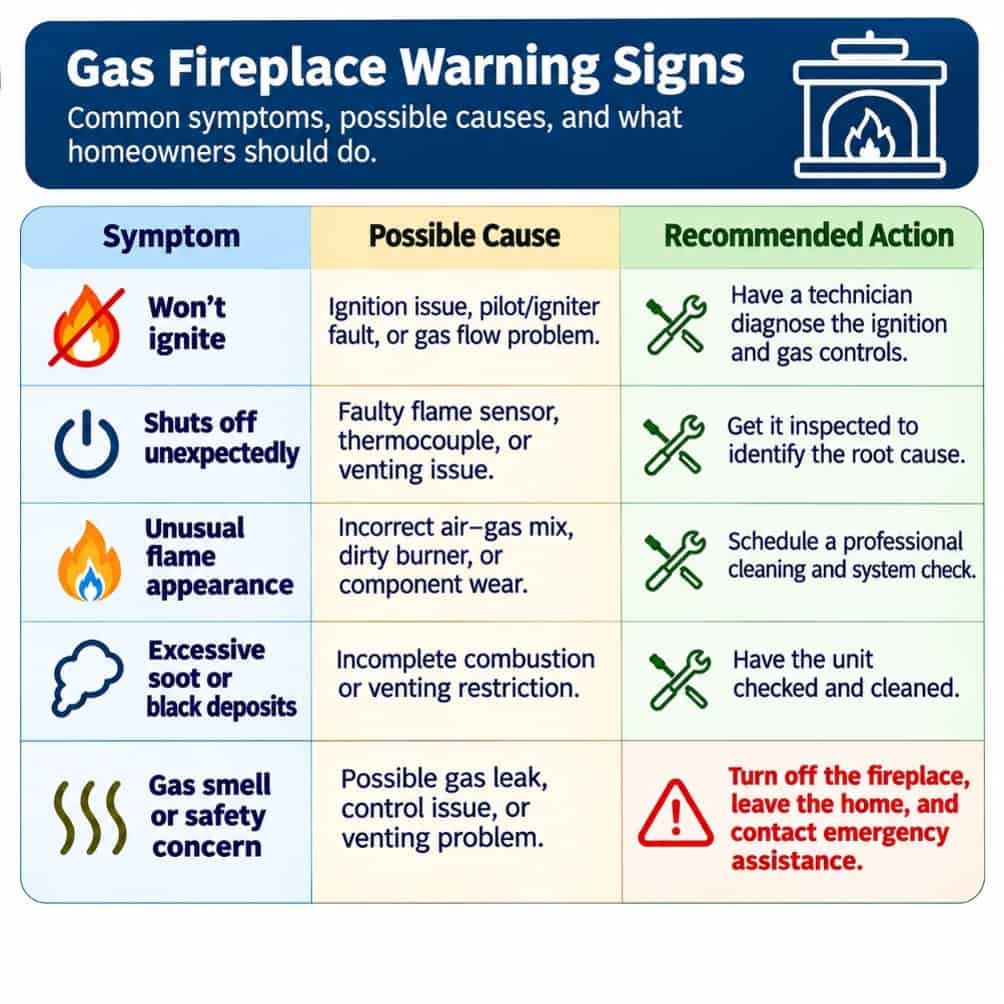
Some symptoms indicate that a gas fireplace needs more than routine maintenance.
Recognizing these warning signs can help prevent equipment damage and protect the people living in your home.
Repeated Ignition Failures
If your fireplace repeatedly fails to ignite or shuts off immediately after starting, the problem may involve a malfunctioning ignition component or safety control.
Even when the system occasionally starts successfully, intermittent failures deserve attention.
A qualified technician can evaluate the ignition sequence and identify the source of the malfunction.
Persistent Soot or Unusual Flame Behaviour
Visible soot accumulation, significant changes in flame appearance, or discolouration around the fireplace may indicate an operating problem.
These symptoms can involve burner conditions, combustion air, log placement, or venting.
Stop using the fireplace until the cause has been professionally assessed.
Unusual Noises or Overheating
Some clicking during ignition and mild sounds from expanding or contracting metal can be normal.
However, persistent banging, grinding, unusually loud ignition, or abnormal blower noise may indicate a developing problem.
Excessive heat affecting nearby surfaces or signs of damage to fireplace glass and seals also warrant professional inspection.
Gas Odours and Carbon Monoxide Concerns
Natural gas leaks and carbon monoxide hazards require immediate action.
If you smell natural gas, leave the building immediately. Do not operate light switches, use electrical devices, or attempt to relight the fireplace.
Contact 911 or your gas utility’s emergency response line from a safe location outside.
Carbon monoxide is colourless and odourless, making functioning carbon monoxide alarms essential.
If a carbon monoxide alarm sounds, evacuate immediately and contact emergency services. Do not return until the property has been declared safe.
Gas Fireplace Problems: Symptoms and Recommended Actions
| Fireplace Problem | Possible Cause | Recommended Action |
| Remote doesn’t respond | Dead batteries or control issue | Check accessible batteries and settings |
| Pilot won’t stay lit | Thermocouple, pilot assembly, or gas pressure problem | Schedule professional inspection |
| Fireplace clicks but won’t ignite | Igniter, control module, or gas supply issue | Arrange professional diagnosis |
| Fireplace shuts off unexpectedly | Sensor, gas valve, or venting problem | Stop repeated ignition attempts and request service |
| Excessive soot | Combustion or burner problem | Stop using the fireplace and arrange inspection |
| Blower makes grinding noises | Worn motor or mechanical fault | Request professional repair |
| Gas odour or CO alarm | Potential safety hazard | Evacuate and contact emergency authorities |
Gas Fireplace Not Working Properly?
ALP Heating Services provides professional residential fireplace repair in Vaughan, Thornhill, and surrounding GTA communities. Get qualified assistance diagnosing ignition problems, faulty controls, and other gas fireplace malfunctions.
[REQUEST GAS FIREPLACE REPAIR SERVICE]
What Happens During a Professional Gas Fireplace Inspection?
Professional gas fireplace servicing involves identifying the cause of the malfunction and evaluating whether the appliance can operate safely.
Because different manufacturers use different ignition systems and control configurations, the exact inspection process depends on the fireplace model and reported symptoms.
Inspection of Ignition and Safety Components
A technician may begin by reviewing the fireplace’s ignition sequence and assessing components responsible for starting and maintaining the flame.
Depending on the model, this can include the pilot assembly, igniter, thermocouple, thermopile, flame sensor, and electronic ignition module.
Testing helps determine whether a component has failed or whether another operating condition is affecting its performance.
Gas Valve and Supply Assessment
The gas valve controls fuel flow to the fireplace.
If the valve or associated controls malfunction, the appliance may fail to ignite, shut down unexpectedly, or operate inconsistently.
Qualified technicians can evaluate gas pressure and relevant control functions using appropriate diagnostic equipment.
Homeowners should never attempt to adjust gas pressure or repair internal gas valve components themselves.
Venting and Combustion Safety Checks
Gas fireplaces must manage combustion products according to their design and installation requirements.
During a professional inspection, the technician may evaluate venting conditions, accessible seals, combustion behaviour, and other relevant safety components.
Blocked or damaged venting can interfere with safe operation and may require corrective work before the fireplace is used again.
Repair Recommendations and Final Testing
Once the malfunction has been identified, the technician can explain the recommended repairs and whether replacement components are required.
After repairs are completed, the fireplace should be tested according to the manufacturer’s requirements to verify normal operation.
This approach helps ensure that the repair addresses the underlying issue rather than temporarily restoring operation without correcting the cause.
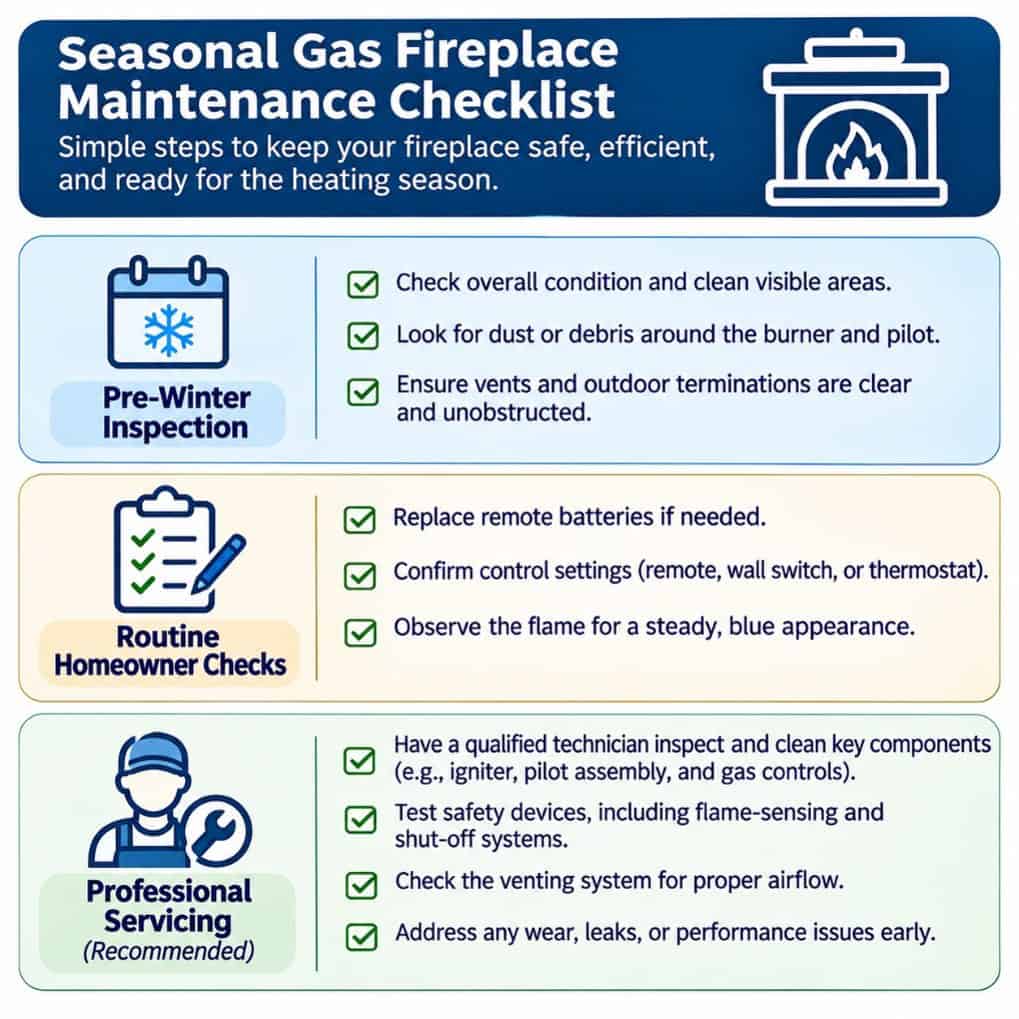
How Regular Maintenance Helps Prevent Fireplace Problems
Regular maintenance helps residential gas fireplaces operate reliably and can reduce the likelihood of unexpected malfunctions.
Although maintenance cannot prevent every component failure, it provides an opportunity to identify developing problems before they interrupt heating performance.
Schedule an Inspection Before the Heating Season
A professional inspection before the fireplace is used extensively can help identify deteriorating ignition components, venting concerns, and other issues.
This is especially useful for fireplaces that remain unused during spring and summer.
Scheduling service before colder weather arrives also provides time to address problems before the fireplace becomes part of your regular heating routine.
Keep Exterior Surfaces and Controls Clean
Dust and debris may accumulate around fireplace surrounds, accessible controls, and external openings.
Homeowners can clean approved exterior surfaces according to the manufacturer’s instructions after the appliance has cooled completely.
Avoid using ordinary household chemicals on fireplace glass unless the manufacturer specifically permits them.
Do not remove sealed glass assemblies, disturb decorative logs, or clean internal burners unless the manufacturer explicitly identifies those procedures as suitable for homeowners.
Monitor Changes in Fireplace Performance
Pay attention to changes in ignition behaviour, flame appearance, heat distribution, and operating noises.
A fireplace that takes longer than usual to ignite or begins shutting down intermittently may have a developing problem.
Documenting these changes can help a technician identify patterns during professional diagnosis.
Why Preventive Service Matters for Older Fireplaces
As gas fireplaces age, components such as ignition sensors, controls, and blower motors may become more susceptible to wear.
Older systems can often continue operating reliably with appropriate maintenance and repairs, depending on equipment condition and replacement-part availability.
A professional assessment can help determine whether servicing is practical or whether replacing aging equipment should be considered.
Professional Gas Fireplace Repair with ALP Heating Services
A gas fireplace that won’t ignite, struggles to maintain a flame, or shuts off unexpectedly may be experiencing anything from a simple control problem to a more serious ignition or gas-related malfunction.
While homeowners can check basic settings and accessible remote batteries, technical repairs involving gas controls, combustion components, and safety devices should always be handled by qualified professionals.
Recognizing warning signs and scheduling appropriate maintenance can help protect your fireplace, maintain reliable operation, and keep your home comfortable during Ontario’s colder months.
ALP Heating Services provides residential gas fireplace repair in Vaughan, Thornhill, and surrounding GTA communities. Its technicians diagnose common fireplace problems, inspect critical components, and recommend repairs based on the appliance’s condition and operating requirements.
Need Gas Fireplace Repair in Vaughan or Thornhill?
Whether your fireplace has stopped igniting, developed unusual noises, or isn’t heating as expected, ALP Heating Services can help identify the problem.
[REQUEST YOUR GAS FIREPLACE REPAIR SERVICE]
Call (647) 972-8714 or submit a service inquiry through the ALP Heating website to arrange an appointment.
Frequently Asked Questions About Gas Fireplace Repair
1. Why won’t my gas fireplace turn on?
A gas fireplace may fail to turn on because of dead remote batteries, incorrect control settings, ignition component failures, or problems affecting gas delivery. Some models also depend on electrical power to operate their ignition systems. Homeowners can check accessible batteries and operating settings, but persistent ignition problems require professional diagnosis.
2. Why does my gas fireplace pilot light keep going out?
A pilot light may repeatedly go out because of a worn thermocouple, a weak or obstructed pilot flame, gas pressure irregularities, or another safety-related problem. The exact cause depends on the fireplace’s design. If the pilot won’t remain lit, a qualified technician should inspect the system rather than relying on repeated relighting attempts.
3. Is it safe to use a gas fireplace that keeps shutting off?
A gas fireplace that repeatedly shuts off should not be used until the cause is understood. Unexpected shutdowns may indicate problems involving flame-sensing components, gas controls, or venting conditions. Although some shutdowns result from relatively minor faults, others involve safety devices responding to abnormal operation. Professional inspection is recommended before continued use.
4. Can homeowners repair a gas fireplace themselves?
Homeowners can perform basic checks such as replacing accessible remote batteries, reviewing operating settings, and observing visible warning signs. However, repairs involving gas valves, pilot assemblies, ignition systems, internal wiring, and combustion components require qualified professionals. In Ontario, regulated fuel-burning appliance servicing must be performed by appropriately certified technicians working for registered contractors.
5. How often should a residential gas fireplace be professionally serviced?
Annual professional servicing is generally a reasonable maintenance schedule for residential gas fireplaces, subject to the manufacturer’s instructions and usage conditions. Routine inspections can help identify ignition problems, deteriorating components, and potential venting concerns. Fireplaces that operate frequently or show signs of malfunction may require additional attention.
6. Does ALP Heating provide gas fireplace repair in Vaughan?
Yes. ALP Heating Services provides residential gas fireplace repair in Vaughan. Its services cover common fireplace problems involving ignition systems, pilot assemblies, flame-sensing components, gas controls, and related equipment. Homeowners can contact the company to describe their fireplace symptoms and confirm appointment availability.
7. Does ALP Heating offer fireplace repair in Thornhill?
Yes. ALP Heating serves residential homeowners in Thornhill and surrounding GTA communities. Its fireplace repair services include professional diagnosis of ignition failures, recurring shutdowns, and other operating problems. Homeowners can request an appointment and provide their fireplace’s make and model to help the team understand the equipment requiring service.
8. Can ALP Heating repair a gas fireplace that clicks but won’t ignite?
Yes. ALP Heating provides diagnostic and repair services for gas fireplaces experiencing ignition failures, including systems that click without producing a flame. Depending on the model, a technician may inspect the igniter, pilot assembly, ignition controls, and relevant gas components to identify the problem and recommend appropriate repairs.
9. Can ALP Heating inspect an older gas fireplace that no longer works reliably?
Yes. ALP Heating can assess older residential gas fireplaces experiencing ignition problems, inconsistent operation, or repeated shutdowns. A professional inspection helps determine whether the malfunction involves a repairable component and whether suitable replacement parts are available. The technician can then discuss practical repair options based on the appliance’s condition.
10. How can homeowners schedule gas fireplace repair with ALP Heating?
Homeowners can request gas fireplace repair in Vaughan or Thornhill by calling ALP Heating Services at (647) 972-8714 or submitting a service request through its website. When contacting the company, provide the fireplace brand, model if available, location, and a description of the problem. ALP Heating can confirm service availability and help arrange a technician appointment.


