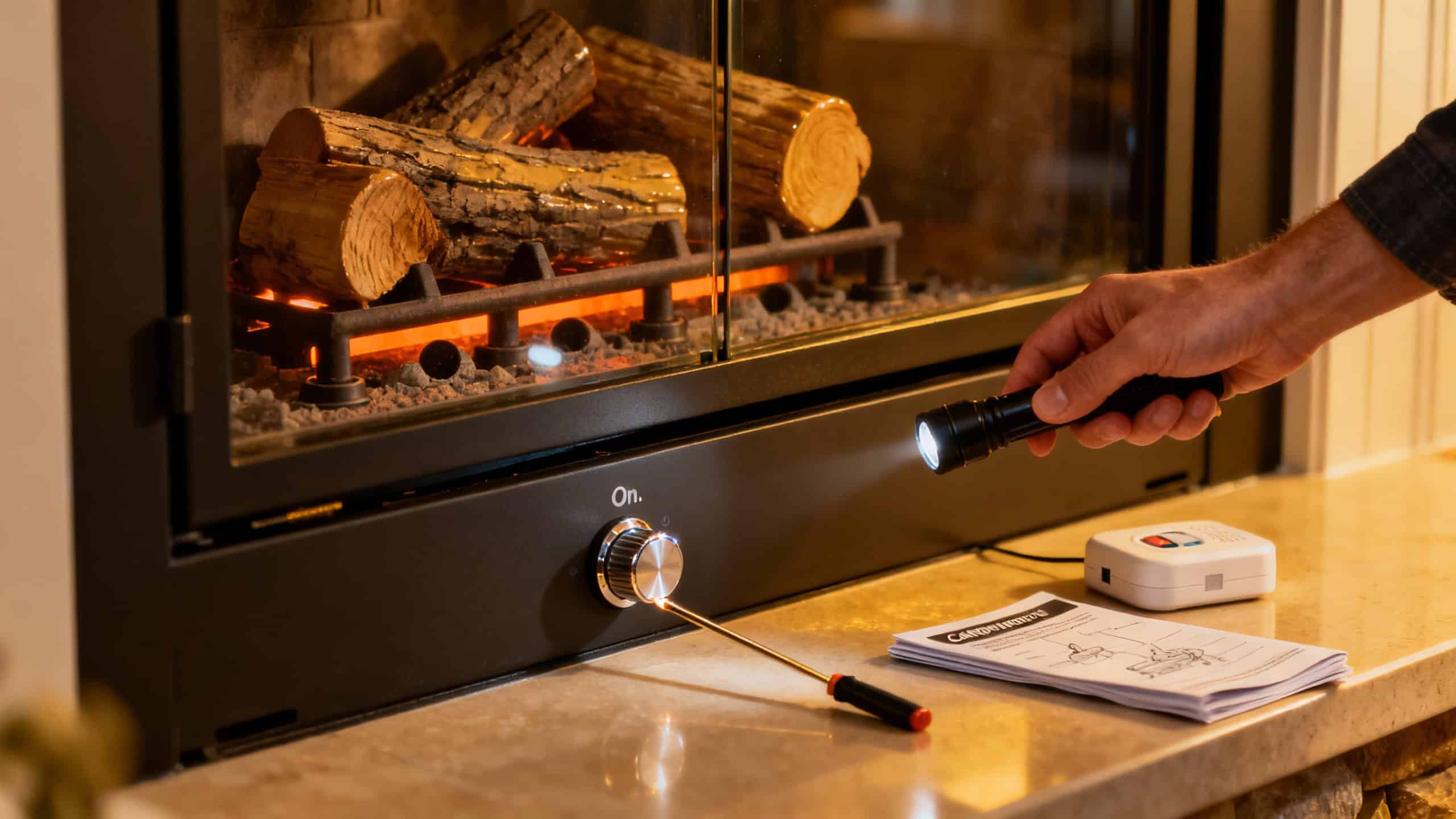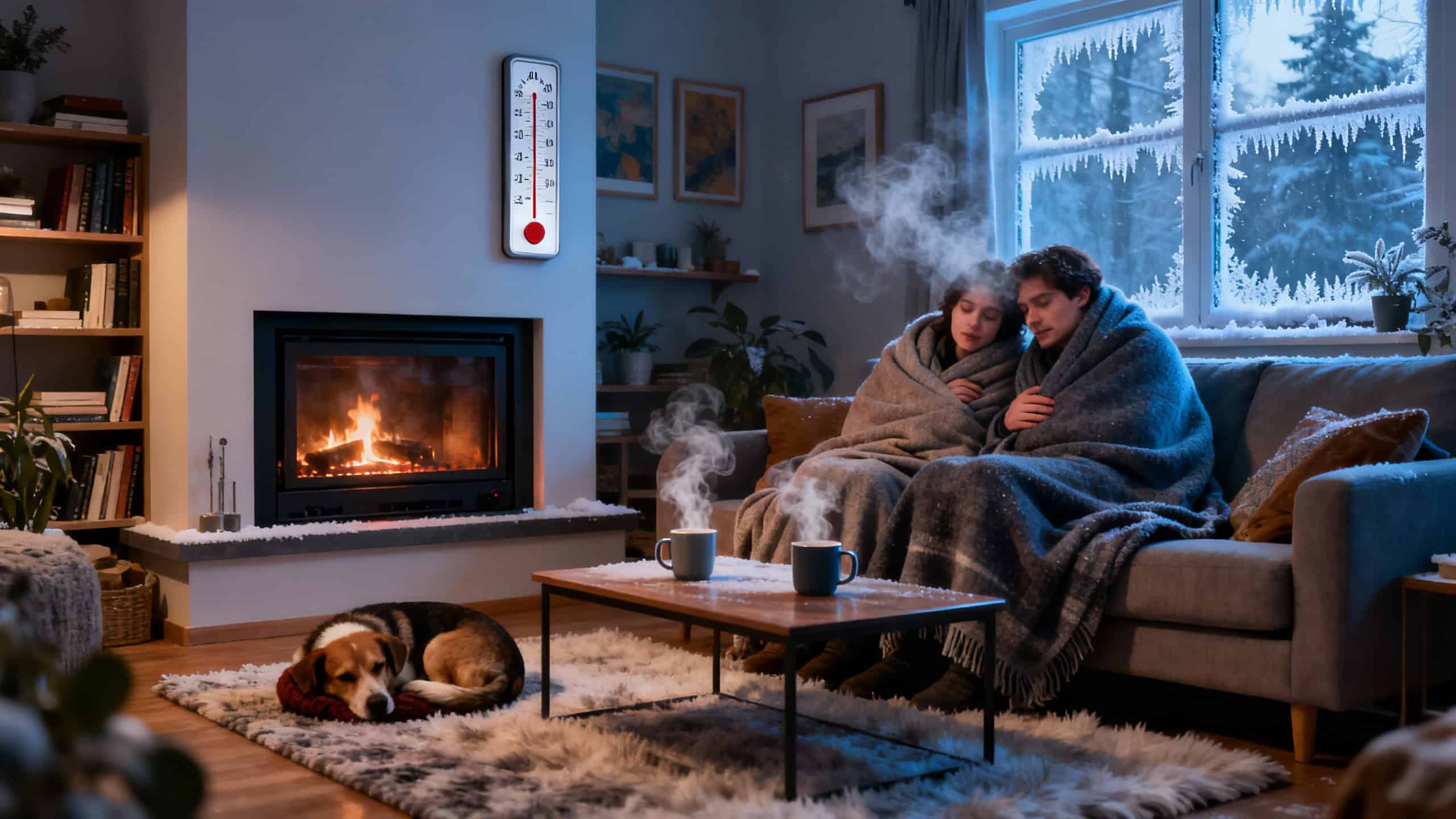
A fireplace that doesn’t heat the room effectively likely suffers from one of several common issues. Traditional open fireplaces lose 80-90% of their heat up the chimney, achieving only 10-15% efficiency.
Common culprits include open dampers that waste up to 30% of generated heat, drafts pulling warm air out, or burning improperly seasoned wood with high moisture content.
Glass doors, firebacks, and fireplace inserts can improve efficiency to 60-80%, potentially doubling heat output. The sections below explore specific solutions and upgrade options in greater detail.
Important highlights
- Traditional open fireplaces lose 80-90% of heat up the chimney, achieving only 10-15% efficiency compared to inserts’ 60-80%.
- Drafts from open dampers waste up to 30% of the generated heat while pushing warm air out of the room.
- Burning green or wet wood instead of seasoned hardwood with under 20% moisture produces excessive smoke and minimal heat.
- Chimney and flue blockages restrict airflow and prevent proper heat circulation throughout the room.
- Inadequate insulation and unsealed gaps between the fireplace and wall allow heat to escape rather than warm the living spaces.
Common Reasons Your Fireplace Isn’t Heating Your Room
A fireplace that fails to heat a room properly often stems from several fixable issues that homeowners can identify with basic inspection. Understanding these common problems helps determine whether a simple adjustment or professional intervention is necessary.
The following sections examine five frequent causes of poor fireplace heating performance, from airflow complications to structural design limitations.
Drafts and Airflow Problems
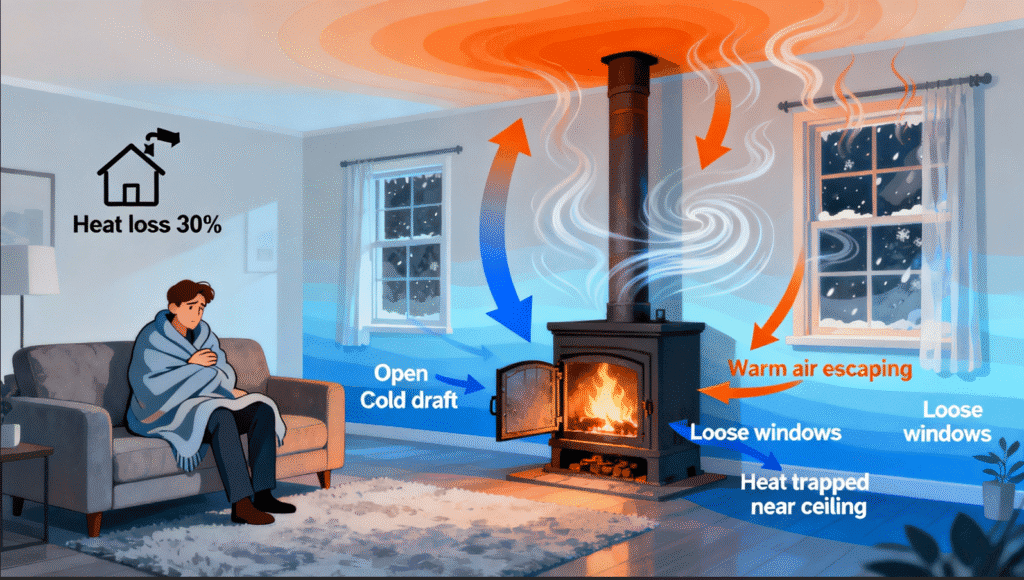
Drafts infiltrating through chimney openings or poor airflow patterns can considerably reduce a fireplace’s heating efficiency, even when the unit itself functions perfectly.
Cold air seeping down the chimney creates a reverse effect, pushing warm air out of the room instead of circulating it effectively. Homeowners experiencing a fireplace not heating a room properly should first check for damper issues.
An open or poorly sealed damper allows constant air exchange with the outdoors, wasting up to 30% of generated heat. Additionally, insufficient return air vents in the room prevent proper circulation.
The warm air rises but has nowhere to distribute, creating stratification where heat stays trapped near the ceiling. Installing chimney balloon devices ($50-$80) or improving room ventilation represents practical fireplace heat loss solutions that address these airflow challenges without requiring major renovations or professional intervention.
Improper Fuel or Burning Techniques
Beyond airflow concerns, burning the wrong materials or using incorrect techniques greatly impacts fireplace heating performance and can even pose safety hazards.
Wood fireplaces require properly seasoned hardwood with a moisture content below 20 percent to burn efficiently. Wet or green wood produces more smoke than heat, wasting fuel and reducing warmth. Softwoods like pine burn quickly without generating sustained heat output.
For gas fireplaces not heating rooms effectively, check that burner ports aren’t clogged with debris or dust. Incorrect flame height settings reduce heat production considerably.
Overloading wood fireplaces with too many logs restricts airflow and smothers flames. Conversely, burning too little fuel fails to generate adequate heat. Using artificial logs in fireplaces designed for natural wood can limit heating capacity.
Always follow manufacturer guidelines for proper fuel types and loading techniques.
Chimney and Flue Issues
Chimneys and flues serve as critical exhaust systems that remove combustion byproducts while creating the draft necessary for proper fireplace operation.
When these components develop blockages from creosote buildup, bird nests, or debris, they restrict airflow and prevent heat from circulating properly into the room.
A blocked flue answers why my fireplace is not heating by forcing warm air up the chimney instead of into my living space.
Important highlights
- Traditional open fireplaces lose 80-90% of heat up the chimney, achieving only 10-15% efficiency compared to inserts’ 60-80%.
- Drafts from open dampers waste up to 30% of the generated heat while pushing warm air out of the room.
- Burning green or wet wood instead of seasoned hardwood with under 20% moisture produces excessive smoke and minimal heat.
- Chimney and flue blockages restrict airflow and prevent proper heat circulation throughout the room.
- Inadequate insulation and unsealed gaps between the fireplace and wall allow heat to escape rather than warm the living spaces.
Lack of Proper Insulation or Sealing Around the Fireplace
Poor insulation around a fireplace creates invisible pathways for heated air to escape before it warms the living space effectively.
Gaps between the fireplace surround and wall framing allow warm air to flow directly into wall cavities instead of circulating through the room. These spaces might measure anywhere from 1/8 inch to several inches wide, depending on installation quality. Homeowners can identify problem areas by holding a lit incense stick near the fireplace perimeter on windy days and watching for smoke movement.
Professional sealing with high-temperature caulk costs between $150 and $300, while DIY solutions using fireplace-rated sealant run approximately $15 to $40.
Additionally, missing or deteriorated insulation in the chimney chase reduces overall heating efficiency by 20 to 35 percent, requiring fibreglass or mineral wool insulation rated for high-temperature applications.
Understanding the different fireplace components—from the burner and pilot assembly to the glass enclosure can help homeowners identify issues early and maintain their system more effectively.
It’s also wise to check fireplace efficiency ratings to ensure your unit delivers optimal heat output while minimizing energy waste.
Outdated or Inefficient Fireplace Design
Older fireplace models often waste more energy than they generate for the living space, operating at efficiency rates between 10 and 30 percent compared to modern units that achieve 70 to 85 percent. Traditional open hearth fireplaces send most heat straight up the chimney instead of radiating it into the room.
Design flaws like oversized fireboxes, poor air circulation systems, and inadequate heat exchangers reduce overall performance considerably. Single-wall construction loses heat to exterior walls rather than directing it inward.
Upgrading to an EPA-certified insert can cost between $2,000 and $4,500 installed, but homeowners typically recover expenses through lower heating bills within three to five years. Gas or electric inserts provide better heat distribution than wood-burning models.
Consider a professional assessment to determine whether retrofit improvements or complete replacement makes financial sense.
Optimizing Your Fireplace for Maximum Heat Output
Getting your fireplace to produce more heat doesn’t have to be a mystery. Several practical adjustments can dramatically improve how much warmth reaches your living space instead of escaping up the chimney.
From choosing better fuel to upgrading key components, these optimization strategies will help you get the most out of your heating investment.
Using the Right Fuel and Building a Better Fire
When it comes to maximizing heat output from a traditional fireplace, choosing the right fuel makes all the difference in how warm your home feels. Hardwoods like oak, maple, and ash burn hotter and longer than softwoods like pine or fir. These dense woods can cost $200-$400 per cord but generate considerably more BTUs per log.
Properly seasoned wood with less than 20% moisture content ignites more easily and produces more heat. Stack logs tightly in a crisscross pattern to promote airflow while maintaining sustained burning. Starting with smaller kindling and gradually adding larger pieces creates a strong fire.
Avoid burning green or wet wood, which creates excessive smoke and minimal heat. Consider using a fireplace grate to elevate logs, allowing air circulation underneath for more complete combustion and better heat production.
A noticeable gas fireplace gas smell issue should never be ignored. While mild startup odors can be normal, persistent or strong smells could signal a leak or incomplete combustion that requires immediate professional inspection.
Sealing and Insulating Your Fireplace Area
Even the hottest fire loses effectiveness when heat escapes through gaps and poorly insulated areas around the fireplace.
Start by inspecting the damper seal when the fireplace isn’t in use. A damaged or warped damper can let warm air escape up the chimney year-round. Check the area where the fireplace meets the wall for cracks or gaps that need caulking.
| Problem Area | Solution | Cost Range |
|---|---|---|
| Damper gaps | Replace the damper seal or install a chimney balloon | $15-$150 |
| Wall cracks | Apply high-temperature silicone caulk | $8-$25 |
| Glass doors | Install tight-fitting tempered glass doors | $200-$800 |
Consider installing insulated glass doors to contain heat while still enjoying the fire’s ambiance. These improvements prevent drafts and redirect warmth into your living space.
Considering a Fireplace Insert or Stove
Traditional open fireplaces lose 70-90% of their heat up the chimney, making inserts and stoves far superior heating solutions.
Fireplace inserts fit directly into existing fireplace openings, converting inefficient fireplaces into powerful heating units. These sealed systems use glass doors and internal baffles to redirect heat into rooms rather than up chimneys.
Wood-burning inserts cost between $2,000-$4,500 installed, while gas inserts range from $3,000-$6,000.
Freestanding wood or pellet stoves offer another efficient option, heating 1,000-2,500 square feet depending on BTU output. Both inserts and stoves achieve 60-85% efficiency ratings compared to 10-30% for open fireplaces.
Modern EPA-certified models burn cleaner and longer, requiring less fuel while producing substantially more heat.
Professional installation guarantees proper venting and maximum performance for decades of reliable heating.
A noticeable gas odor near your unit may indicate a gas fireplace gas smell issue.
While mild smells during startup are normal, continuous or strong odors can signal leaks or incomplete combustion. Always turn off the gas supply and contact a technician if in doubt.
Improving Home Insulation and Air Sealing
Home insulation and air sealing determine whether fireplace heat warms the living space or escapes through walls and cracks.
Poor insulation allows warmth to leak through attics, walls, and floors, forcing the fireplace to work harder with minimal results. Homeowners should check attic insulation levels first, aiming for R-38 to R-60 in colder climates. Adding insulation costs $1,500 to $3,500 for an average home but reduces heat loss by 30 to 50 percent.
Air sealing is equally important. Gaps around windows, doors, and electrical outlets create drafts that pull warm air away from living areas. Caulking and weatherstripping these openings costs $200 to $600 and delivers immediate improvements.
ALP Heating is a trusted provider of gas and electric fireplace repair and installation services across the Greater Toronto Area, helping homeowners restore warmth and energy efficiency to their living spaces.
When to Call a Professional for Fireplace Issues
While some fireplace issues are simple enough for homeowners to handle, certain situations demand professional expertise.
Complex electrical problems, persistent heating failures despite troubleshooting, and unusual burning smells all require immediate professional attention. If you notice sparking, smoke, or damaged wiring, turn off the unit and contact an expert right away.
Gas fireplaces present additional safety concerns that homeowners should never attempt to fix themselves. Licensed technicians have specialized tools and training to diagnose problems accurately. They can also identify hidden issues that might worsen over time.
For residents in Vaughan and the Greater Toronto Area, ALP Heating provides expert fireplace repair services. Their TSSA-licensed professionals handle both electric and gas fireplace problems safely and efficiently.
Call (647) 972-8714 to schedule an inspection when DIY solutions fall short.
For residents who experience persistent heating issues or safety concerns, it’s best to schedule professional fireplace repair services. Certified technicians can diagnose and resolve problems safely, ensuring your unit runs efficiently through the winter months.
Frequently Asked Questions About Fireplace Heating
Homeowners often have several common questions when their fireplace isn’t heating their home effectively.
Understanding the answers to these concerns can help you make better decisions about maintenance, fuel choices, and whether your current setup is working properly.
Let’s address the most frequently asked questions about fireplace heating performance and efficiency.
Can a fireplace really heat a whole house?
For a whole-house heating solution, homeowners would need multiple units strategically placed throughout different rooms. In smaller homes or apartments ranging from 600 to 1,000 square feet, a single high-output electric fireplace might provide supplemental warmth to several connected spaces.
However, larger homes exceeding 1,500 square feet require a central HVAC system for primary heating. Electric fireplaces work best as zone heating solutions, warming frequently used living areas while reducing reliance on whole-house heating.
This targeted approach can lower energy bills by 10 to 20 percent during moderate weather conditions.
How often should I clean my chimney?
Regular chimney maintenance schedules depend entirely on the type of fireplace and how frequently it gets used throughout the heating season.
Wood-burning fireplaces require the most attention because they produce creosote buildup. The National Fire Protection Association recommends annual inspections for all chimneys. However, cleaning frequency varies based on usage patterns.
- Heavy users (burn wood daily): Clean chimney every 50-70 burns or mid-season
- Moderate users (2-3 fires weekly): Schedule professional cleaning once annually
- Light users (occasional fires): Inspect yearly, clean every 2-3 years if minimal buildup
- Gas fireplaces: Annual inspection sufficient, cleaning every 2 years typically adequate
- Pellet stoves: Clean every ton of pellets burned, roughly 2-3 times per season
Professional chimney sweeps charge $150-$400 per cleaning, depending on buildup severity and chimney height.
What’s the best type of wood for heating?
Beyond maintaining a clean chimney, selecting the right firewood makes an enormous difference in heating efficiency and overall performance.
Hardwoods like oak, maple, and ash are the top choices for maximum heat output. These dense woods burn longer and produce more BTUs per cord than softwoods like pine or spruce. A cord of seasoned oak generates approximately 24-28 million BTUs, while pine only delivers 14-17 million BTUs.
Properly seasoned wood with a moisture content below 20% burns most efficiently. Expect to pay $200-$400 per cord, depending on your location and wood type.
Split logs should be stored in a dry, covered area for at least six months before burning. Avoid green or wet wood, which creates excessive smoke and creosote buildup.
Is an open fireplace always inefficient?
Traditional open fireplaces lose 80-90% of their heat straight up the chimney, making them notoriously inefficient for home heating. The remaining 10-20% barely warms the immediate area around the hearth.
However, several modifications can dramatically improve performance without eliminating the open-fire experience.
How can I tell if my fireplace is losing heat?
Even the most efficient fireplace modifications won’t matter if heat escapes through hidden problems that homeowners fail to notice.
Look for visible smoke entering the room instead of going up the chimney, which indicates poor draft. Feel around the fireplace frame for cold air leaks during operation. Check if rooms far from the fireplace stay warmer than the room with the fireplace itself, suggesting heat loss through the chimney.
Notice excessive soot buildup on glass doors or the firebox, pointing to incomplete combustion and wasted energy. Place your hand near the fireplace damper when it’s closed; cold air means a poor seal.
Watch for flickering flames that indicate air leaks pulling heat away. Monitor your heating bills for unexpected increases during fireplace use, which reveals inefficiency.