Installing a new furnace is an important investment in your home’s comfort, efficiency, and long-term heating reliability. But if you’re planning a furnace installation in Vaughan, one of your first questions is probably how much it will cost. The final price mostly depends on your home’s heating requirements, furnace efficiency, equipment features, and any modifications needed to accommodate the new system.
Key Takeaways: Furnace Installation Costs in Vaughan
- Typical installation costs: Many residential furnace installations in the GTA fall between $4,000 and $7,000, depending on equipment selection and installation requirements.
- Furnace size matters: Larger homes may require greater heating capacity, but proper sizing should be determined by a professional heat-load assessment rather than square footage alone.
- Efficiency and comfort features affect pricing: Two-stage heating, modulating burners, and variable-speed blowers can increase upfront costs while improving temperature consistency and comfort.
- Installation complexity affects the total: Changes to ductwork, gas connections, electrical components, or venting can increase labour and material expenses.
- Professional installation protects your investment: A qualified furnace installer in Vaughan can recommend compatible equipment and ensure that the system operates safely and efficiently.
How Much Does Furnace Installation Cost in Vaughan?
The average furnace installation cost in Vaughan varies depending on the heating equipment selected and the work required to install it.
For many homeowners replacing an existing natural gas furnace, a typical installation may fall within the $4,000 to $7,000 range. However, higher-end systems featuring advanced heating controls, quieter operation, and variable-speed technology may exceed that estimate.
The following table provides an approximate comparison of residential furnace installation costs in the GTA.
| Furnace Type | Estimated Installed Cost (CAD) | Main Characteristics |
| High-efficiency single-stage furnace |  5,000 | Basic heating controls and generally lower upfront costs |
| High-efficiency two-stage furnace | 6,500 | More flexible heating output and improved temperature consistency |
| Premium modulating furnace | 9,000+ | Precise heating control, enhanced comfort, and advanced blower technology |
These are illustrative 2026 GTA market estimates, not ALP Heating Services quotes. Actual prices vary by brand, capacity, installation conditions, and included work. HST and additional modifications may not be included in every advertised price.
Why Furnace Installation Prices Vary Between Homes
Two Vaughan homeowners purchasing similar furnaces may receive different installation estimates.
For example, replacing an existing furnace in an accessible basement with compatible ductwork and venting may be relatively straightforward. Another home might require new exhaust piping, adjustments to the return-air system, or changes to existing connections.
Those additional requirements increase the amount of labour, materials, and testing involved.
This is why an accurate installation quote should consider both the furnace itself and the condition of the home’s existing heating infrastructure.
What Factors Affect the Cost of a New Furnace?
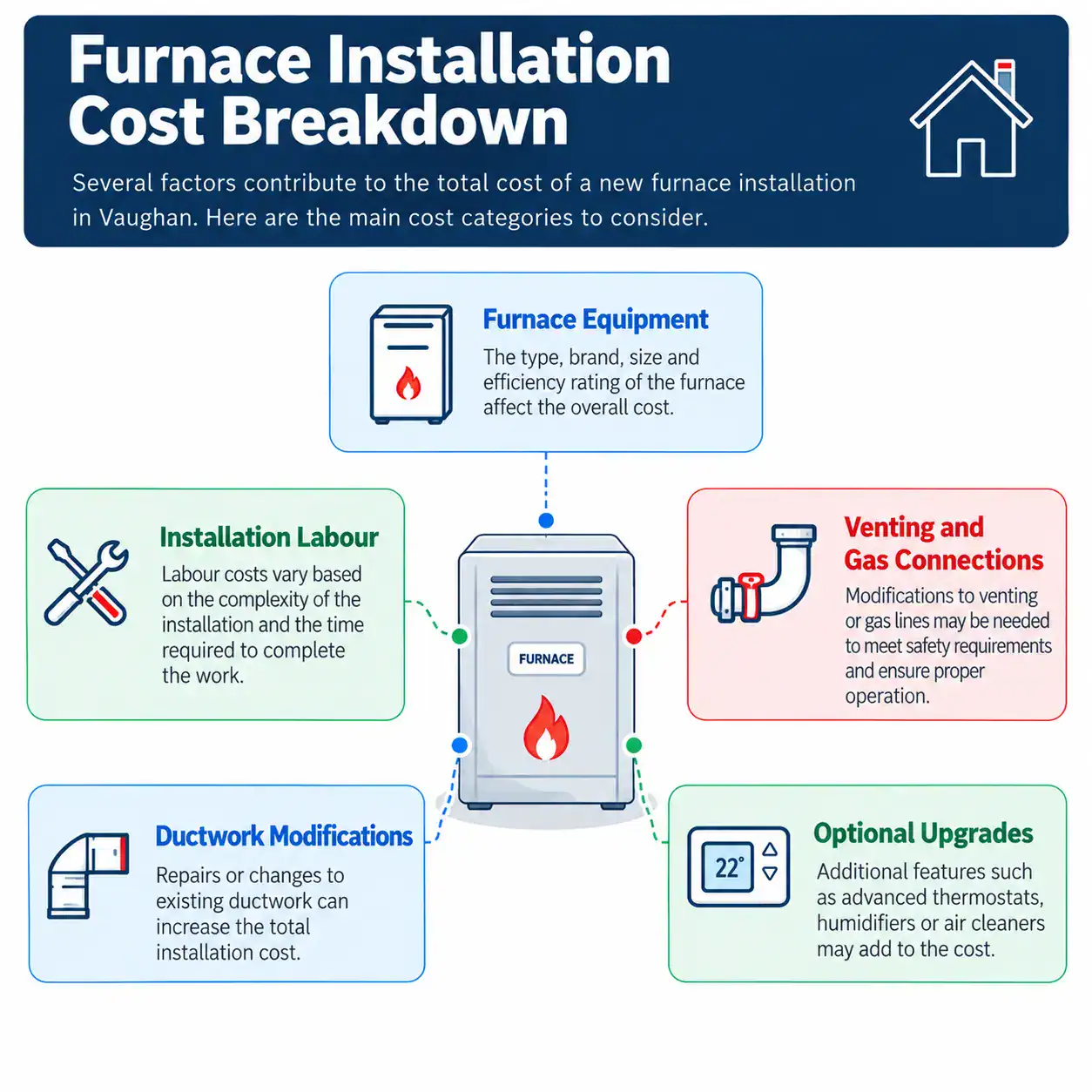
Several variables determine how much homeowners pay for a new heating system. Understanding these factors can make it easier to evaluate installation recommendations and avoid unnecessary expenses.
1. Furnace Size and Heating Capacity
Furnace capacity is commonly measured in British Thermal Units per hour (BTU/h). A larger home may require more heating capacity than a smaller property, but floor area is only one consideration.
A professional should also evaluate:
- The home’s insulation and air-sealing quality
- Window size and energy performance
- Ceiling height and overall layout
- Existing ductwork and airflow
- Heat loss during Vaughan’s winter temperatures
An oversized furnace may cycle on and off more frequently than necessary, while an undersized system may struggle to maintain comfortable indoor temperatures.
Proper sizing helps homeowners avoid paying for unnecessary heating capacity while improving performance and comfort.
2. Furnace Brand and Equipment Features
Different manufacturers offer varying levels of heating performance, warranty coverage, and equipment technology.
While a basic high-efficiency furnace may satisfy the needs of some households, others may benefit from a system with quieter operation or more precise temperature control.
Premium features can include variable-speed blower motors, communicating thermostats, and modulating gas valves.
Rather than selecting a furnace based solely on brand recognition, homeowners should compare the features that meaningfully affect comfort, reliability, and total ownership costs.
3. Labour and Installation Complexity
Professional installation involves considerably more than positioning a new furnace.
Technicians must evaluate the existing system, disconnect and remove outdated equipment, complete necessary connections, verify venting and airflow, and test the furnace before placing it into service.
The amount of work depends on several factors, including access to the installation area, the condition of existing connections, and whether the replacement equipment fits the available space.
A straightforward replacement will generally require less work than an installation involving substantial modifications.
4. Venting and Gas Line Requirements
Modern high-efficiency gas furnaces typically use dedicated venting systems to manage combustion gases safely.
Depending on the existing installation, replacing an older furnace may require changes to intake and exhaust piping, condensate drainage, or gas connections.
These modifications can increase the initial installation cost, but they are important for safe operation and equipment compatibility.
All gas-related installation work should be completed by appropriately qualified professionals in accordance with applicable Ontario requirements.
5. Existing Ductwork and Airflow
Even an efficient new furnace may struggle to heat a home consistently if the existing ductwork is poorly sized, damaged, or restricted.
During an installation assessment, a technician may identify issues such as inadequate return airflow, leaking duct connections, or ductwork that cannot properly support the new system.
Some homes need only minor adjustments, while others may require more extensive work.
Addressing these problems during installation can help the new furnace distribute heated air more effectively throughout the property.
How Furnace Efficiency and Features Influence Pricing
Furnace efficiency is another major consideration when comparing equipment.
A furnace’s Annual Fuel Utilization Efficiency (AFUE) rating indicates the proportion of fuel energy converted into usable heat over a typical heating season.
For example, a 96% AFUE furnace converts approximately 96% of the fuel’s energy into heat under standardized rating conditions.
Under current Canadian energy efficiency regulations, most newly manufactured residential gas furnaces in the relevant product category must meet a minimum 95% AFUE requirement, with certain exceptions.
As a result, homeowners shopping for a new gas furnace should generally compare high-efficiency models rather than treating older 80% AFUE equipment as a standard purchasing option.
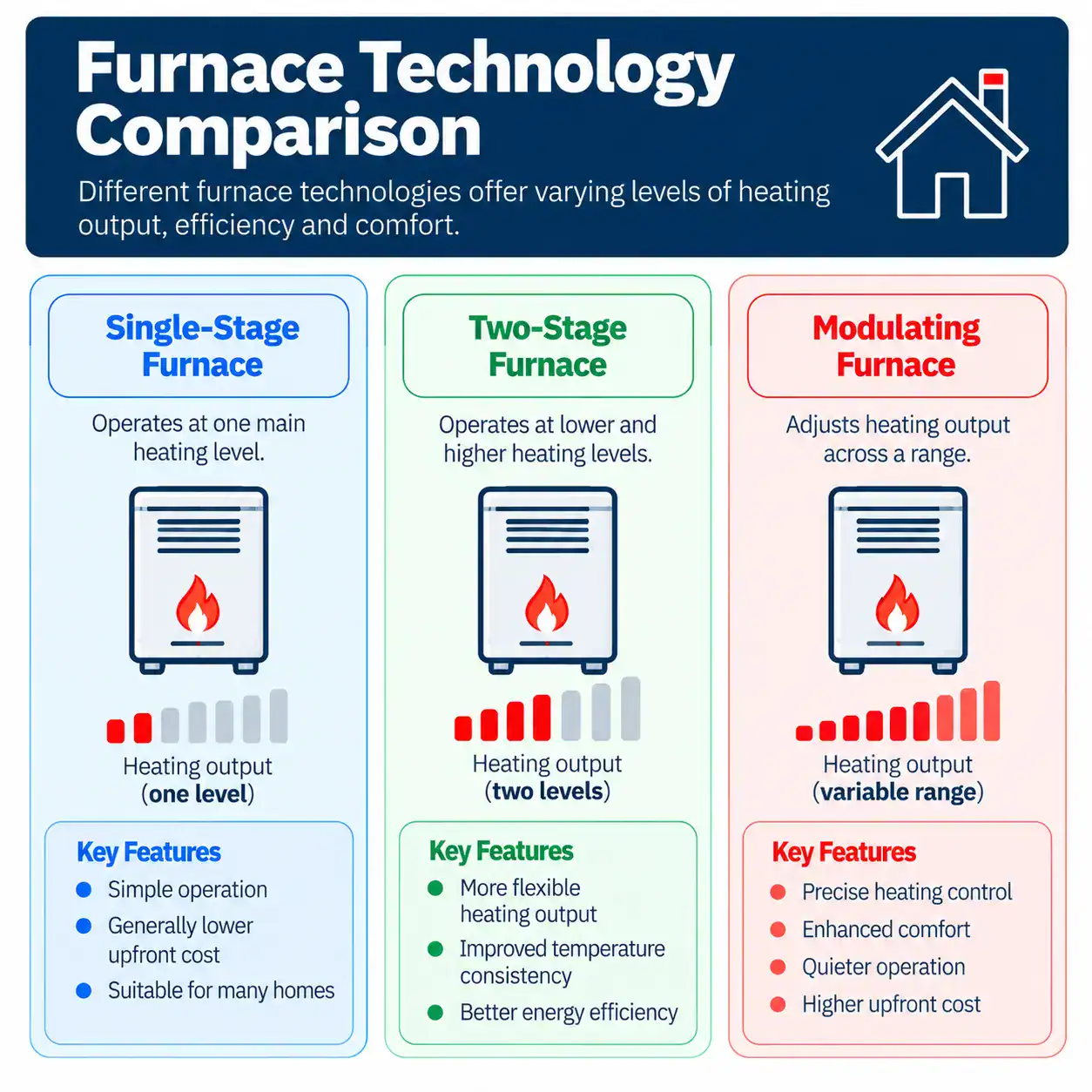
Single-Stage vs. Two-Stage vs. Modulating Furnaces
Beyond efficiency ratings, furnaces differ in how they control heat output.
| Feature | Single-Stage | Two-Stage | Modulating |
| Heat output | One main heating level | Lower and higher heating levels | Adjusts output across a range |
| Upfront cost | Generally lower | Moderate | Generally higher |
| Temperature consistency | Basic | Improved | More precise |
| Comfort control | Standard | Enhanced | Advanced |
| Best suited for | Homes with straightforward heating needs | Homeowners seeking a balance of cost and comfort | Homeowners prioritizing precise control and premium comfort |
Two-stage and modulating furnaces can operate at lower heating outputs during milder conditions, helping maintain more consistent temperatures.
However, the most expensive model is not automatically the best choice.
A properly sized single-stage furnace may be sufficient for some Vaughan homes, while a two-stage or modulating system could provide worthwhile comfort improvements in others.
Will a High-Efficiency Furnace Lower Your Heating Bills?
A high-efficiency furnace can reduce natural gas consumption compared with an older, less efficient system, provided that the equipment is properly sized and installed.
Actual savings depend on the efficiency of the furnace being replaced, household heating demand, thermostat settings, gas prices, and the condition of the home.
For homeowners replacing an aging heating system, discussing estimated operating costs with an HVAC professional can help determine whether additional equipment features justify their upfront price.
Need Help Choosing a New Furnace?
ALP Heating Services provides residential furnace installation in Vaughan and the Greater Toronto Area. Get professional guidance on selecting a heating system that fits your home’s requirements and budget.
BUTTON CTA [REQUEST INSTALLATION QUOTE]
Additional Costs to Consider Before Installing a Furnace
When comparing installation estimates, it’s important to look beyond the advertised equipment price.
Certain installation requirements may not be included in a basic furnace quote, particularly when an older heating system needs modifications to accommodate newer equipment.
Removal and Disposal of the Existing Furnace
Replacing an older furnace typically involves disconnecting and removing the existing unit.
Some installation estimates include removal and disposal, while others may itemize these services separately.
Before accepting a quote, confirm whether the total price covers responsible removal of the old equipment.
Thermostat Upgrades
A new furnace may work with an existing thermostat, but some advanced models require compatible controls to access all their heating features.
Upgrading to a programmable or smart thermostat can provide more convenient temperature scheduling and control.
However, homeowners should verify compatibility before assuming a thermostat upgrade is necessary.
Venting, Drainage, and Electrical Modifications
Switching from an older furnace to a modern condensing system may require modifications to exhaust venting and condensate drainage.
Additional electrical work or changes to gas piping may also be necessary, depending on the installation.
These costs should be clearly identified during the assessment whenever the required work can be determined in advance.
Installation Permits and Applicable Requirements
Depending on the scope of the project, certain building or mechanical modifications may require permits or additional inspections.
A qualified installer should identify the requirements applicable to the property and explain how any associated work affects the estimate.
Homeowners should avoid assuming that every furnace replacement involves the same approvals or installation conditions.
How to Choose the Right Furnace Installer in Vaughan
Selecting the right contractor is just as important as choosing the right furnace.
An experienced furnace installer in Vaughan should evaluate the home’s heating needs, explain equipment options, and provide a clear understanding of what the installation involves.
Check Licensing and Qualifications
Gas furnace installation involves fuel connections, combustion equipment, electrical components, and safety controls.
In Ontario, businesses performing regulated fuels-related work must have the appropriate Technical Standards and Safety Authority (TSSA) registration, and the individuals performing the work must hold the qualifications required for their tasks.
Before hiring a contractor, homeowners should verify the business’s registration and ask about the qualifications of the technicians assigned to the installation.
Request a Detailed Written Estimate
A clear furnace installation estimate should identify the equipment and the work included in the quoted price.
Ask whether the estimate covers:
- Furnace make, model, and heating capacity
- Equipment efficiency rating and key features
- Installation labour and materials
- Required venting or connection modifications
- Removal of the existing furnace
- Equipment and workmanship warranties
- Applicable taxes and additional charges
Written estimates make it easier to compare contractors fairly and identify differences in installation scope.
Evaluate More Than the Lowest Price
A lower installation price may be appealing, but it should not be the only deciding factor.
Consider whether the contractor has evaluated your home’s actual heating requirements, explained the recommended equipment, and accounted for important safety and performance checks.
Choosing an installer based on overall value can help avoid compatibility problems, unnecessary upgrades, and additional expenses after installation.
Save on Long-Term Heating Costs with Professional Installation
A new furnace should be viewed as a long-term investment rather than a one-time purchase.
When properly selected, installed, and maintained, a residential furnace can provide dependable heating for many years.
Proper Installation Helps Maintain Energy Efficiency
Even a highly efficient furnace may underperform if it is incorrectly sized or installed.
Professional installation helps ensure that airflow, venting, heating controls, and other essential components function according to the equipment manufacturer’s requirements.
This supports dependable operation and helps the system deliver its intended performance.
Regular Maintenance Helps Protect Your Investment
After installation, routine maintenance plays an important role in preserving furnace performance.
Annual professional inspections can help identify developing issues, verify safe operation, and address wear before it leads to more serious problems.
Homeowners should also replace or clean furnace filters according to manufacturer recommendations and household conditions.
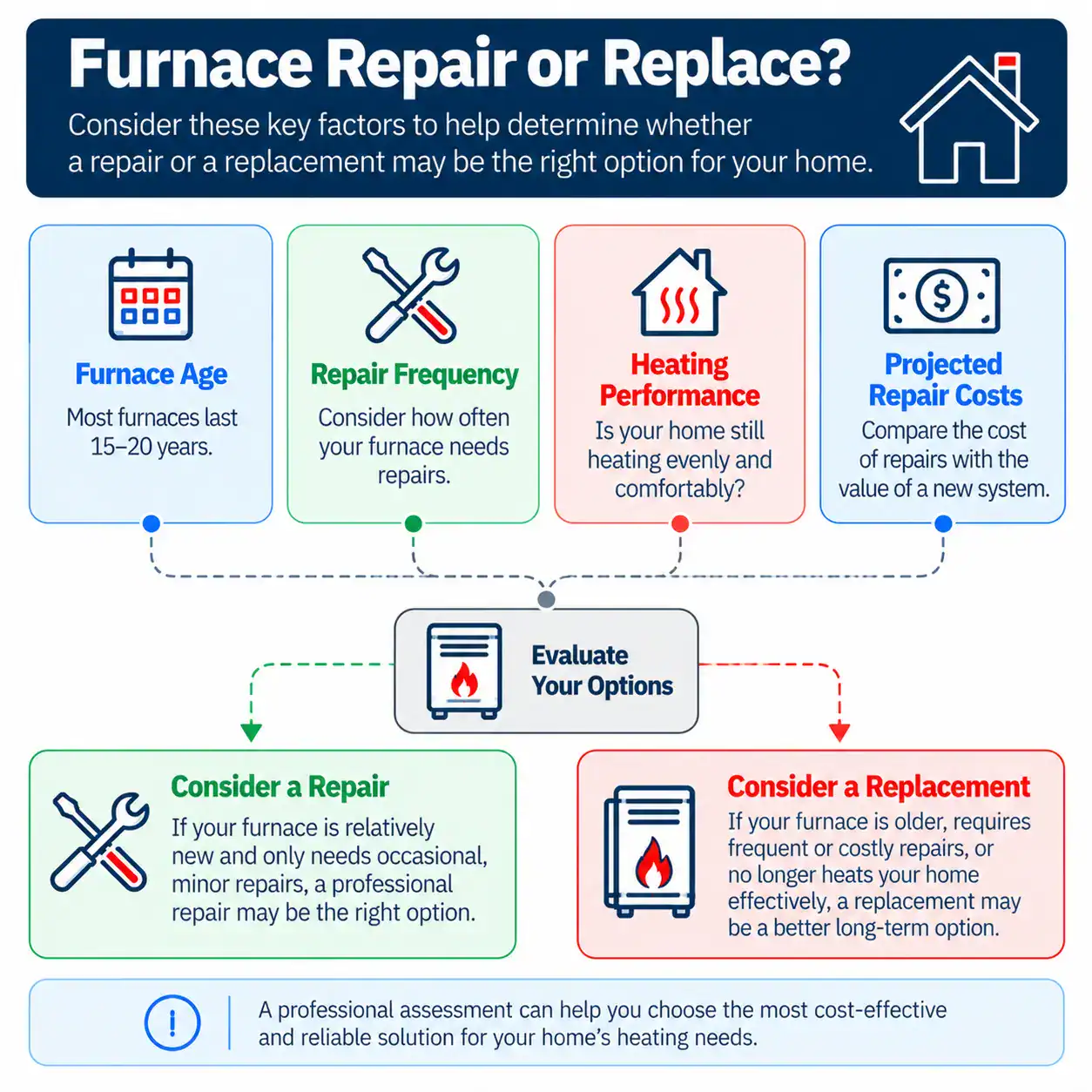
Consider Repair Costs Before Replacing Your Furnace
If your current furnace still operates, replacement may not always be necessary.
Age, repair history, energy efficiency, and the cost of required repairs should all factor into the decision.
For example, a relatively new furnace experiencing an isolated component failure may be worth repairing. An older system requiring repeated expensive repairs may present a stronger case for replacement.
A professional assessment can help clarify the options before committing to a new installation.
Plan Your Furnace Installation with ALP Heating Services
Understanding furnace installation costs in Vaughan makes it easier to plan your budget and choose a heating system with confidence.
While many residential installations fall within the $4,000 to $7,000 range, the final price depends on furnace capacity, equipment technology, installation labour, and the condition of your home’s existing heating system.
The right installation should deliver more than dependable warmth. It should provide appropriate heating capacity, efficient operation, and long-term comfort without unnecessary expenses.
ALP Heating Services provides residential furnace installation and replacement services for homeowners in Vaughan and surrounding GTA communities. With qualified technicians and experience working with residential heating equipment, ALP Heating helps homeowners evaluate their options and select solutions suited to their properties.
Ready to Install a New Furnace in Vaughan?
Whether you’re replacing an aging furnace or planning a new residential heating installation, ALP Heating Services can help you take the next step.
BUTTON CTA: [REQUEST INSTALLATION QUOTE]
Call (647) 972-8714 to discuss your heating needs and request an installation estimate.
Frequently Asked Questions About Furnace Installation in Vaughan
1. How much does it cost to install a furnace in Vaughan?
Residential gas furnace installation in Vaughan commonly costs approximately $4,000 to $7,000, although premium systems or installations requiring extensive modifications may cost more. Pricing depends on furnace capacity, efficiency, equipment features, and labour requirements. A professional assessment is the best way to determine the cost for your home.
2. How long does furnace installation take?
A straightforward residential furnace replacement often takes approximately four to eight hours. However, installations requiring significant ductwork, venting, gas piping, or electrical modifications may take longer. Your installer can provide a more accurate timeline after evaluating the existing system.
3. Is a high-efficiency furnace worth the additional cost?
A high-efficiency furnace can help reduce natural gas consumption compared with older, less efficient equipment. However, nearly all standard newly manufactured residential gas furnaces sold for typical installations in Canada already meet high-efficiency requirements. The decision often comes down to comparing heating controls, comfort features, equipment prices, and expected long-term operating costs.
4. Do I need to replace my ductwork when installing a new furnace?
Not necessarily. If the existing ductwork is properly sized, in good condition, and compatible with the new furnace, replacement may not be required. However, restricted airflow, damaged ducts, or inadequate return-air capacity could make modifications necessary for efficient heating.
5. What is the average lifespan of a residential furnace?
Many residential gas furnaces last approximately 15 to 20 years, although their actual lifespan depends on maintenance, usage, installation quality, and operating conditions. Regular inspections and timely repairs can help support reliable performance throughout the equipment’s service life.
6. Should I repair or replace my existing furnace?
The decision depends on the furnace’s age, condition, efficiency, and repair costs. A relatively new system with a minor repair may be worth keeping, while an older furnace experiencing frequent breakdowns may justify replacement. A qualified HVAC technician can evaluate the equipment and recommend practical options.
7. How can I get an accurate furnace installation quote in Vaughan?
Start by contacting a qualified residential HVAC contractor and requesting an assessment of your existing heating system. The installer should consider your home’s heating requirements, equipment compatibility, and any necessary modifications before preparing an estimate. ALP Heating Services offers residential furnace installation consultations for homeowners in Vaughan and surrounding service areas.
8. How does furnace efficiency rating affect installation costs?
Furnaces with higher efficiency ratings and advanced features generally have higher upfront costs, but they can help reduce long-term heating expenses. Most new residential gas furnaces in Canada must meet a minimum 95% Annual Fuel Utilization Efficiency (AFUE) rating, with certain exceptions. Premium models offering variable-speed blowers, two-stage heating, or modulating burners typically cost more but can provide better temperature control and comfort.
9. Does replacing existing ductwork increase furnace installation costs?
Yes, replacing or modifying existing ductwork can increase furnace installation costs in Vaughan because it requires additional materials and labour. However, complete ductwork replacement is not always necessary. If your existing ducts are properly sized, in good condition, and compatible with the new furnace, they can often be reused. A qualified HVAC technician can assess whether modifications are necessary to maintain proper airflow and heating efficiency.
10. Are permits and inspections included in furnace installation pricing in Vaughan?
Permits and inspections are not automatically included in every furnace installation quote. Requirements depend on the scope of work and applicable local regulations. While a straightforward replacement may not require the same approvals as an installation involving significant alterations, certain modifications may require additional permits or inspections. Before proceeding, ask your furnace installer in Vaughan whether any approvals are necessary and whether the associated costs are included in the estimate.
11. What should I ask a furnace installer in Vaughan before accepting a quote?
Before accepting a furnace installation quote, ask about the recommended furnace size, efficiency rating, equipment warranty, installation labour, and any additional costs for venting or ductwork modifications. Confirm whether removal of the existing furnace, applicable permits, inspections, and taxes are included. It’s also important to verify the contractor’s TSSA registration and the technicians’ qualifications. A reputable installer should provide a detailed written estimate and explain the recommended equipment before installation begins.
12. Does ALP Heating provide upfront estimates for furnace installation in Vaughan?
Yes. ALP Heating Services provides upfront estimates for residential furnace installation in Vaughan. Homeowners can request a free preliminary estimate by phone or email based on their home’s size, existing heating system, and installation requirements. For a more detailed assessment, an in-person consultation may involve a service-call fee. ALP Heating provides clear pricing before work begins, helping homeowners understand their options without unexpected charges.
13. What types of furnaces does ALP Heating install in Vaughan homes?
ALP Heating installs high-efficiency natural gas furnaces for residential properties throughout Vaughan and the Greater Toronto Area. The company works with established manufacturers such as Lennox, Carrier, and Goodman, offering equipment options suited to different heating requirements and budgets. Its technicians can help homeowners compare furnace capacity, efficiency ratings, and available comfort features to determine which system best fits their home.
14. Does ALP Heating offer financing options for new furnace installations?
Yes. ALP Heating offers flexible financing options for residential furnace installations through Financeit, a Canadian financing provider. Eligible homeowners can spread installation costs across monthly payments rather than paying the entire amount upfront. Financing is subject to credit approval, and available interest rates, promotional offers, and repayment terms may vary. Homeowners can discuss financing options with ALP Heating before proceeding with their installation.
15. Can ALP Heating help homeowners find cost-effective furnace installation options in Vaughan?
Yes. ALP Heating helps Vaughan homeowners compare furnace options based on their heating requirements, budget, and long-term operating costs. Its technicians can recommend appropriately sized, energy-efficient equipment while identifying whether existing ductwork and other components can be reused. This approach helps homeowners avoid unnecessary upgrades and select a residential heating system that balances upfront installation expenses with dependable long-term performance.
16. Does ALP Heating provide warranty coverage for furnace installations in Vaughan?
Yes. ALP Heating provides a written labour warranty on its furnace installations, along with applicable manufacturer warranties on the installed equipment. Warranty coverage depends on the furnace model, manufacturer, and specific installation terms. Before proceeding, homeowners can request details about labour coverage, equipment protection, warranty duration, and any maintenance or registration requirements that may apply.