When your furnace stops heating properly, your first instinct might be to check what’s wrong before calling a professional. Sometimes, the solution is surprisingly simple. A dirty air filter, incorrect thermostat setting, or tripped circuit breaker could be responsible. Other problems, however, require specialized tools and technical expertise.
Knowing the difference can help you avoid unnecessary repairs while protecting your home’s heating system. For homeowners considering furnace repair in Toronto, understanding which troubleshooting steps are safe to perform and when to call a qualified technician is especially important during Ontario’s colder months.
This guide explores common furnace problems, practical DIY checks, and the warning signs that indicate it’s time for professional furnace repair.
Key Takeaways: DIY Furnace Fixes vs. Professional Repairs
- Start with simple checks. Thermostat settings, dirty air filters, and tripped circuit breakers are common causes of heating problems that homeowners can investigate safely.
- Cold air doesn’t always mean a major breakdown. Incorrect fan settings, restricted airflow, or interrupted heating cycles may explain why your furnace isn’t producing enough heat.
- Leave technical repairs to professionals. Gas valves, ignition systems, electrical components, pressure switches, and other safety controls require qualified technicians.
- Recognize serious warning signs. Burning odours, loud banging, repeated shutdowns, and carbon monoxide alarms require prompt attention.
- Professional diagnosis prevents guesswork. A qualified furnace technician in Toronto can identify the underlying problem and recommend appropriate repairs rather than replacing components unnecessarily.
Which Furnace Problems Can You Safely Troubleshoot Yourself?
Not every furnace problem requires an immediate service appointment. Some heating issues originate from settings or maintenance tasks that homeowners can check without opening the furnace or handling internal components.
These initial checks can help determine whether the problem has a straightforward explanation.
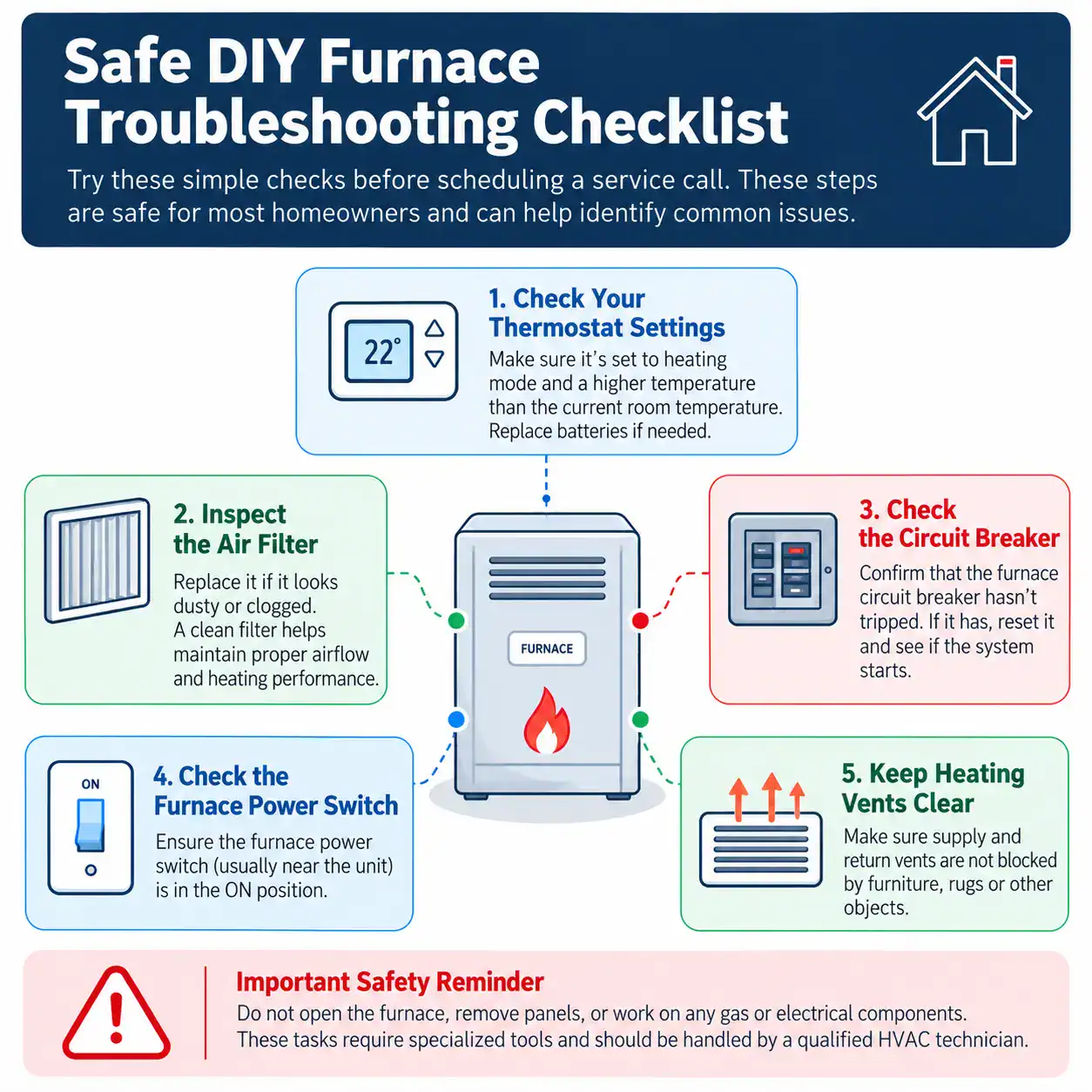
However, homeowners should avoid disassembling the furnace, testing electrical circuits, or attempting repairs involving gas or combustion components.
Check Your Thermostat Settings
An incorrectly configured thermostat can make a functioning furnace appear broken.
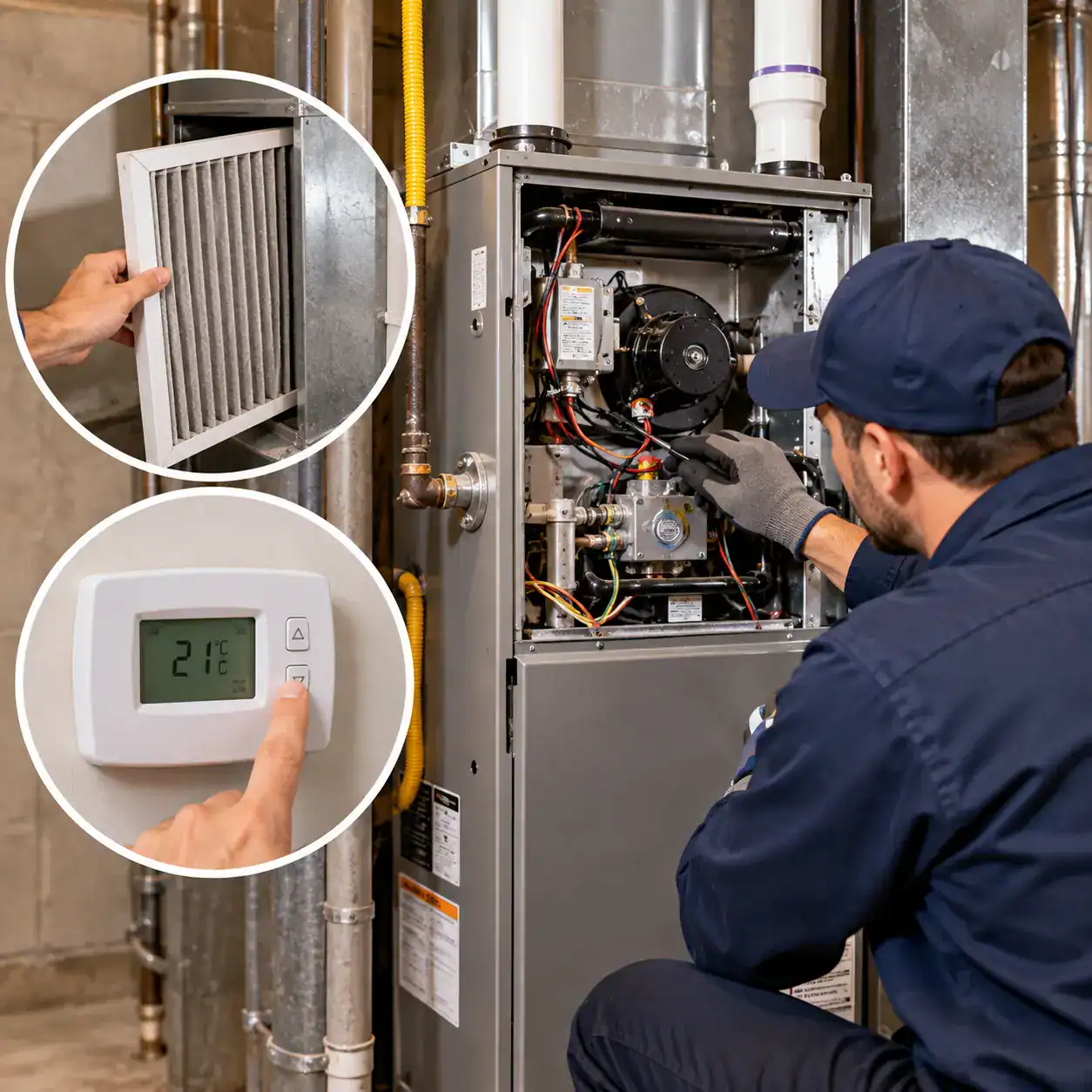
Start by checking whether the thermostat is set to heating mode and whether the desired temperature is higher than the current room temperature.
If the thermostat operates on replaceable batteries, check whether they need replacing.
Also, review the fan setting. When the fan is set to “ON,” the blower may continue circulating air even when the furnace isn’t actively heating. This can make the air coming from supply vents feel cooler.
Switching the fan setting to “AUTO” typically allows the blower to operate according to the heating system’s control sequence.
If the thermostat remains unresponsive or the furnace still fails to start, further diagnosis may be necessary.
Inspect and Replace a Dirty Furnace Filter
A clogged air filter is one of the most common maintenance issues affecting residential heating systems.
As dust and debris accumulate, airflow through the furnace becomes restricted. This can cause overheating, reduced heating performance, or repeated shutdowns.
Homeowners can usually inspect and replace an accessible furnace filter without professional assistance.
Before replacing it:
- Turn off the heating system using the thermostat and follow the manufacturer’s filter replacement instructions.
- Locate the filter compartment or designated filter slot.
- Check whether the filter is excessively dirty or obstructed.
- Replace it with a compatible filter of the correct dimensions and airflow rating.
- Restart the system and observe whether heating performance improves.
Filter replacement intervals depend on the equipment, household conditions, and filter type.
If the furnace continues shutting down after a filter replacement, don’t assume the issue has been resolved. Additional airflow or safety-control problems may be present.
Check the Circuit Breaker and Furnace Power Switch
A furnace requires electrical power to operate its controls, blower, and ignition components.
If the system doesn’t respond to the thermostat, check whether the furnace’s external power switch is on and whether its circuit breaker has tripped.
If a breaker has tripped, follow appropriate electrical safety precautions. Do not repeatedly reset a breaker that continues tripping, as this can indicate a more serious electrical problem.
A furnace that consistently loses power should be inspected by a qualified professional.
Make Sure Heating Vents Are Clear
Furniture, rugs, curtains, and other household objects can obstruct supply or return-air openings.
Restricted airflow may contribute to inconsistent temperatures and excessive strain on furnace components.
Walk through your home and check whether accessible vents are blocked.
Keep furniture and other objects away from airflow openings, and avoid closing large numbers of supply registers in an attempt to redirect heat unless your system was designed for that operation.
If certain rooms remain noticeably colder despite clear vents, the issue may involve ductwork, airflow balancing, or furnace performance.
Why Your Furnace Might Stop Heating Properly
A furnace can continue running without providing adequate heat. In other situations, it may attempt to start but shut down before completing a heating cycle.
Understanding the possible causes can help homeowners describe symptoms accurately when requesting professional service.
Why Is Your Furnace Blowing Cold Air?
Cold air coming from your heating vents doesn’t necessarily mean the furnace has failed completely.
Several issues can cause this symptom.
Thermostat fan settings: A blower set to run continuously may circulate unheated air between heating cycles.
Dirty air filters: Restricted airflow can cause the furnace to overheat and activate its high-temperature safety controls.
Ignition problems: A faulty igniter, flame sensor, or another component may prevent the burners from operating correctly.
Control system issues: Problems involving the thermostat, circuit board, or safety switches can interrupt the heating process.
If basic thermostat and filter checks don’t resolve the problem, a technician can inspect the system to identify the cause.
Why Does Your Furnace Keep Turning On and Off?
Frequent starting and stopping is commonly called short cycling.
A furnace that short-cycles may not run long enough to maintain consistent temperatures throughout the home.
Possible causes include restricted airflow, overheating, thermostat problems, or improperly sized equipment.
Some ignition and safety-control malfunctions can also interrupt heating cycles.
Although a dirty filter is a reasonable first item to check, repeated shutdowns should not be ignored.
Why Does Your Furnace Run Without Heating the House?
If the furnace runs continuously but indoor temperatures remain low, the system may be struggling to deliver sufficient heat.
Possible explanations include:
- Restricted airflow through the filter or ductwork
- A thermostat that isn’t accurately measuring temperature
- Problems affecting combustion or heat production
- Excessive heat loss through poorly insulated areas
- Furnace capacity that doesn’t match the home’s heating requirements
Professional diagnosis can help distinguish equipment malfunctions from broader home heating issues.
Common Furnace Problems That Require a Technician
Some furnace problems involve components that homeowners should not attempt to repair themselves.
In Ontario, regulated gas appliance servicing must be performed by appropriately certified technicians working for registered contractors.
Professional furnace repair in Vaughan and Toronto typically involves examining the system’s controls, mechanical components, and safety mechanisms to determine why heating performance has declined.
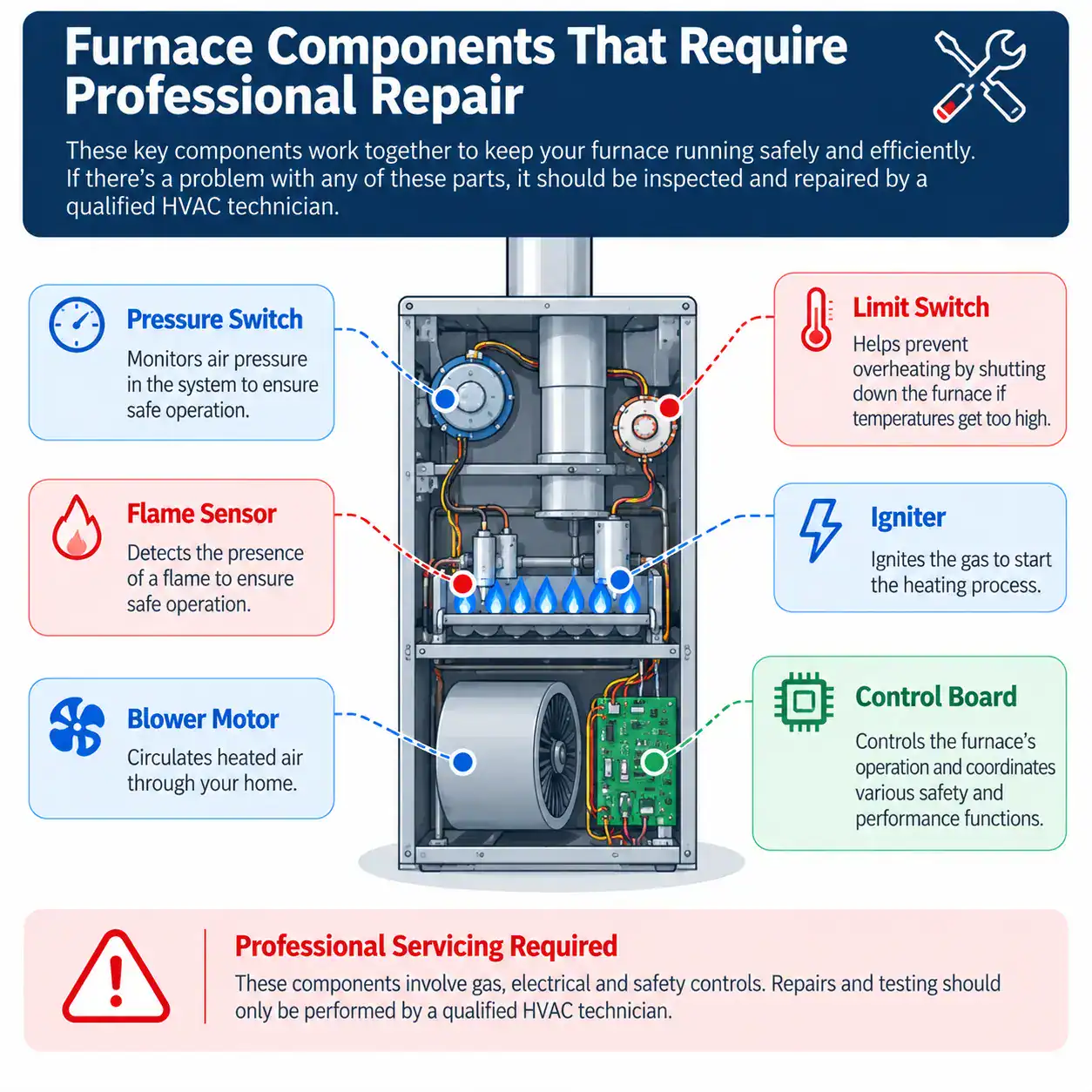
Furnace Ignition and Flame Sensor Problems
The ignition system allows a gas furnace to begin producing heat safely.
Modern systems may use electronic igniters, flame sensors, gas valves, and control boards that work together during the heating sequence.
When these components malfunction, the furnace may attempt to ignite but shut off shortly afterward.
Common symptoms include:
- Repeated ignition attempts
- Burners that ignite and then shut off
- Furnace lockout messages or error codes
- Little or no heat reaching the living space
A dirty or malfunctioning flame sensor can interrupt the heating cycle, but similar symptoms may result from other ignition or gas supply problems.
Professional testing helps identify the correct cause before components are cleaned, repaired, or replaced.
Furnace Blower Motor Failures
The blower motor circulates heated air through the ductwork and into different rooms.
When the motor begins failing, homeowners may notice weak airflow, unusual noises, or a furnace that doesn’t distribute heat properly.
Potential causes include worn motor bearings, damaged electrical components, control problems, or mechanical obstructions.
Because blower motor repairs may involve stored electrical energy and moving parts, internal testing and replacement should be left to trained technicians.
Pressure Switch and Venting Problems
A furnace pressure switch is a safety component that helps verify proper draft conditions before gas burners operate.
If the switch doesn’t detect the required conditions, the furnace may prevent ignition or stop the heating sequence.
Possible causes include blocked venting, damaged pressure-sensing components, a failing inducer motor, or an electrical problem.
Homeowners should never bypass or force a pressure switch to operate.
A technician must determine whether the switch itself has failed or whether another issue is preventing safe furnace operation.
Limit Switch and Overheating Problems
A furnace’s high-temperature limit switch helps protect the system from overheating.
If internal temperatures exceed safe operating conditions, the control system can shut off the burners.
A furnace experiencing repeated limit-switch interruptions may have restricted airflow, a dirty filter, a malfunctioning blower, or another problem.
Replacing the limit switch without addressing the underlying cause may leave the original safety issue unresolved.
A qualified technician can inspect the system, evaluate airflow, and determine which repairs are necessary.
Electrical and Control Board Malfunctions
Modern furnaces rely on electronic controls to coordinate ignition, blower operation, and safety functions.
A faulty control board, wiring connection, relay, or electrical component can cause unpredictable operation or prevent the furnace from starting.
Professional diagnostic equipment helps technicians identify electrical faults without relying on guesswork.
Homeowners should avoid testing live electrical components or opening sealed control compartments
Furnace Still Not Heating Properly?
ALP Heating Services provides residential furnace repair in Toronto, Vaughan, and surrounding GTA communities. Qualified technicians can diagnose heating problems, identify faulty components, and recommend appropriate repairs.
BUTTON CTA: [REQUEST INSTALLATION QUOTE]
Warning Signs You Shouldn’t Ignore
While minor maintenance issues can sometimes be resolved at home, certain furnace symptoms warrant professional attention.
Recognizing these warning signs early can help prevent additional equipment damage and protect household safety.
Unusual Furnace Noises
Furnaces produce some normal operating sounds, including airflow, burner ignition, and occasional expansion or contraction of metal components.
However, new or unusually loud noises can indicate developing mechanical or combustion problems.
| Furnace Noise | Possible Cause | Recommended Action |
| Squealing or grinding | Worn blower motor bearings or mechanical friction | Arrange professional inspection |
| Repeated loud banging | Possible delayed ignition or ductwork expansion | Stop using the furnace if the noise appears related to burner ignition; request professional service |
| Persistent rattling | Loose panels, blower components, or mounting hardware | Arrange inspection if noise persists |
| Unusual humming or buzzing | Motor, capacitor, or electrical component problems | Request professional diagnosis |
| High-pitched whistling | Restricted airflow or ductwork issues | Check the filter and accessible vents; request service if unresolved |
A single sound doesn’t provide enough information for a reliable diagnosis.
If a furnace begins producing harsh noises, especially around ignition, continuing to operate it without inspection may worsen the underlying issue.
Repeated Shutdowns and Flashing Error Codes
Many modern furnaces display diagnostic information through blinking indicator lights or digital error codes.
These signals can help identify the operating condition responsible for a shutdown.
For example, a code might indicate an ignition failure, pressure switch fault, overheating event, or another system interruption.
However, error codes differ between furnace manufacturers and models.
Homeowners can record the code and consult the manufacturer’s documentation, but they shouldn’t attempt to bypass safety controls or repeatedly reset the furnace to force it to operate.
If the same warning continues appearing, a qualified technician should investigate.
Burning Smells or Signs of Electrical Damage
A brief dusty smell may occur when a heating system first operates after an extended period of inactivity.
However, persistent burning odours, visible smoke, or signs of damaged electrical components should never be treated as normal.
If it is safe to do so, stop operating the furnace and arrange professional inspection.
Do not attempt to identify damaged internal wiring or electrical components yourself.
Gas Odours and Carbon Monoxide Alarms
Gas leaks and carbon monoxide hazards require immediate safety precautions rather than ordinary troubleshooting.
If you smell natural gas, leave the building immediately. Avoid operating electrical switches, using flames, or attempting to locate or repair the leak. Contact the gas utility’s emergency line or emergency services from a safe location outside.
Carbon monoxide is colourless and odourless, making functioning CO alarms essential for homes with fuel-burning equipment.
If a carbon monoxide alarm sounds, leave the property immediately and call 911 or local emergency services from outside.
Do not return until emergency responders confirm that it is safe.
These situations must be handled by the appropriate emergency authorities before any routine furnace repair appointment is arranged.
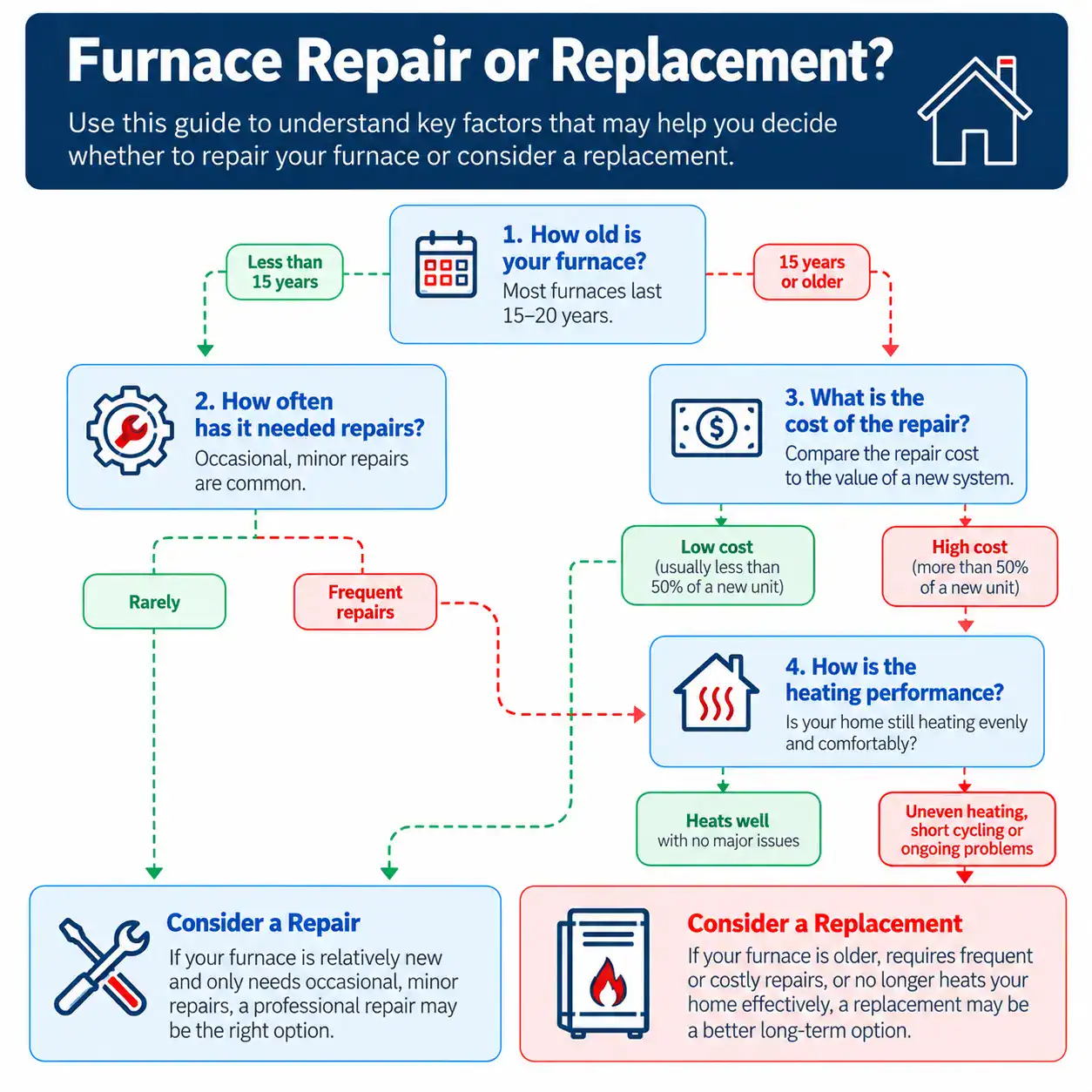
Furnace Repair vs. Replacement: How to Decide
When a furnace develops a significant problem, homeowners may wonder whether repairing the equipment is still worthwhile.
The answer depends on the system’s age, condition, repair history, and overall efficiency.
Consider Your Furnace’s Age
Many residential gas furnaces operate for approximately 15 to 20 years, although actual service life varies.
An older furnace isn’t automatically beyond repair, but aging equipment may be more likely to experience component wear and declining efficiency.
If your system is approaching the end of its expected service life, comparing repair costs with replacement options may be worthwhile.
Compare Repair Costs and Reliability
An isolated problem involving a relatively inexpensive component may justify repair, particularly when the furnace has otherwise performed reliably.
However, replacement may become more attractive when:
- The furnace requires frequent service appointments
- Repair costs are becoming increasingly expensive
- Major components are deteriorating
- The system struggles to heat the home consistently
- Energy consumption has increased despite regular maintenance
A qualified furnace technician in Toronto can evaluate the equipment and explain the likely costs and benefits of each option.
Consider Energy Efficiency and Home Comfort
An older furnace may consume more natural gas than a modern high-efficiency system.
If the equipment is also experiencing repeated performance problems, replacement could provide improvements in comfort and operating efficiency.
However, a newer furnace may not resolve every heating issue if the underlying problem involves inadequate insulation, poor ductwork, or restricted airflow.
A proper assessment should consider the complete heating system before recommending replacement.
| Situation | Repair May Be Appropriate | Replacement May Be Worth Considering |
| Relatively new furnace | Minor, isolated component failure | Major damage or recurring serious defects |
| Older furnace | Affordable repair with otherwise reliable performance | Repeated breakdowns and significant wear |
| Rising heating costs | Correctable maintenance or control issue | Aging, inefficient equipment |
| Uneven heating | Airflow or thermostat problem | Incorrect equipment capacity or major system limitations |
How Professional Furnace Repair Protects Your Home
Professional furnace repair involves more than replacing a malfunctioning component.
An experienced technician evaluates the system to determine why the problem developed and whether additional issues could affect heating performance or safety.
Accurate Diagnosis Helps Avoid Unnecessary Repairs
Several furnace problems can produce similar symptoms.
For instance, repeated shutdowns might result from a dirty filter, faulty flame sensor, restricted venting, or control board malfunction.
Replacing components without identifying the cause can lead to unnecessary expenses and recurring problems.
Professional testing helps narrow down the source of the malfunction and establish an appropriate repair plan.
Safety Checks Help Protect Your Household
Gas furnaces contain combustion systems and safety controls designed to prevent dangerous operating conditions.
A qualified technician can inspect relevant components, verify safe operation, and identify issues involving venting, ignition, overheating, or gas connections.
These checks are particularly important when the furnace has experienced repeated lockouts, unusual combustion noises, or other safety-related symptoms.
Preventive Maintenance Helps Reduce Future Breakdowns
Routine maintenance can help identify developing problems before they cause a complete heating failure.
Professional service may include:
- Inspecting furnace safety controls
- Checking ignition and combustion performance
- Evaluating blower operation and airflow
- Inspecting venting and accessible connections
- Reviewing the condition of filters and other serviceable components
- Testing overall furnace operation
Scheduling maintenance before winter can help homeowners identify potential problems before heating demand increases.
Regular inspections also provide an opportunity to evaluate equipment age, performance, and future repair needs.
Get Reliable Furnace Repair with ALP Heating Services
Some furnace problems can be resolved through simple homeowner maintenance. Checking thermostat settings, replacing dirty filters, and keeping vents unobstructed are reasonable first steps when your heating system isn’t performing as expected.
However, persistent shutdowns, ignition failures, unusual noises, and electrical or gas-related issues require professional attention.
Understanding when to stop troubleshooting helps protect your furnace from further damage and ensures that potentially serious problems receive the appropriate inspection.
ALP Heating Services provides residential furnace repair in Toronto, Vaughan, and communities throughout the Greater Toronto Area. Its qualified technicians diagnose heating problems, repair faulty components, and help homeowners determine whether continued repairs or equipment replacement make the most sense.
Need a Furnace Technician in Toronto or Vaughan?
If your furnace is blowing cold air, shutting down unexpectedly, or making unusual noises, ALP Heating Services can help identify the cause and recommend the next steps.
BUTTON CTA: [REQUEST INSTALLATION QUOTE]
Call (647) 972-8714 to discuss your heating concerns and schedule a residential furnace inspection.
Frequently Asked Questions About Furnace Repair
1. What furnace issues can homeowners safely troubleshoot without professional help?
Homeowners can safely perform basic furnace checks such as verifying thermostat settings, replacing accessible air filters, checking external power switches, and making sure heating vents are unobstructed. These steps may resolve common heating problems without professional repairs. However, issues involving gas connections, ignition systems, electrical components, or furnace safety controls should always be handled by qualified technicians.
2. Why does a furnace blow cold air instead of heat?
A furnace may blow cold air because the thermostat fan is set to run continuously, the air filter is clogged, or the heating cycle has been interrupted. Ignition failures, malfunctioning flame sensors, and other control problems can also prevent the burners from producing heat. If checking the thermostat and filter doesn’t resolve the problem, professional diagnosis can identify the underlying cause.
3. Can a clogged air filter cause a furnace to shut down?
Yes. A clogged air filter restricts airflow through the furnace, which can cause internal temperatures to rise. If the furnace overheats, its high-temperature limit switch may shut off the burners to protect the equipment. Replacing a dirty filter can sometimes resolve the problem, but repeated shutdowns should be investigated by a qualified technician.
4. What does a flashing error code on a furnace mean?
A flashing furnace error code indicates that the system’s control board has detected a particular operating condition or malfunction. Depending on the model, codes may relate to ignition failures, overheating, pressure switch problems, or other faults. Homeowners can consult the manufacturer’s manual to identify the code’s meaning, but persistent faults require professional testing and repair.
5. When do unusual furnace noises indicate a serious problem?
Unusual furnace noises may indicate a serious issue when they are loud, persistent, worsening, or accompanied by reduced heating performance. Grinding can suggest blower motor problems, while banging near burner ignition may indicate a combustion-related fault. Persistent buzzing, squealing, or rattling also warrants inspection. Homeowners should stop using a furnace that produces potentially dangerous ignition noises and arrange professional service.
6. Does ALP Heating provide furnace repair services in Toronto, Vaughan, and across the GTA?
Yes. ALP Heating Services provides residential furnace repair in Toronto, Vaughan, and surrounding Greater Toronto Area communities. Its technicians diagnose and repair common gas furnace problems, including ignition failures, airflow restrictions, blower motor issues, and heating system malfunctions. Homeowners can contact ALP Heating to confirm service availability and schedule an appointment for their location.
7. Can ALP Heating diagnose furnace ignition and thermostat problems?
Yes. ALP Heating provides professional furnace diagnostics covering ignition systems, thermostats, heating controls, and related components. Its technicians can investigate problems such as failed ignition attempts, repeated furnace shutdowns, incorrect thermostat responses, and inconsistent heating. Once the cause is identified, homeowners can receive recommendations for appropriate repairs or component replacement.
8. Does ALP Heating offer emergency furnace repair for unexpected heating breakdowns?
ALP Heating provides residential furnace repair appointments for unexpected heating breakdowns in Vaughan, Toronto, and surrounding GTA communities. However, it does not operate a guaranteed 24/7 emergency repair service. Homeowners can contact ALP Heating during its regular business hours to discuss the problem and confirm appointment availability. If a breakdown involves a gas leak or carbon monoxide alarm, leave the property and contact emergency services immediately.
9. Can ALP Heating help determine whether a faulty furnace needs repair or replacement?
Yes. ALP Heating can assess a malfunctioning residential furnace and help homeowners compare repair and replacement options. Its technicians can consider the equipment’s age, condition, repair history, heating performance, and potential repair costs. This helps homeowners determine whether restoring the existing system is practical or whether investing in a new furnace may provide better long-term value.
10. How can homeowners schedule a professional furnace technician across the GTA through ALP Heating?
Homeowners can schedule residential furnace repair through ALP Heating by calling (647) 972-8714 or submitting a service request through its website. When contacting the company, provide your location, furnace model if available, and a description of the heating problem. ALP Heating can then confirm service availability and help arrange an appointment with a qualified technician.