A reliable furnace is essential for keeping your home comfortable during Ontario’s colder months. However, even well-maintained heating systems can develop problems over time. From inconsistent temperatures and unusual noises to ignition failures and unexpected shutdowns, furnace issues can affect comfort, energy efficiency, and household safety.
For homeowners searching for furnace repair in Thornhill or Vaughan, understanding common heating problems is the first step toward finding the right solution. Some symptoms may result from routine maintenance issues, while others indicate failing components that require professional attention.
This guide explores the most common furnace problems affecting Vaughan and Thornhill homes, explains what causes them, and outlines when to schedule professional repairs to keep your heating system operating safely and efficiently.
Key Takeaways: Common Furnace Problems in Vaughan and Thornhill
- Heating problems have several possible causes. Dirty filters, faulty thermostats, worn blower motors, and ignition failures can all affect furnace performance.
- Uneven heating isn’t always caused by the furnace itself. Ductwork restrictions, inadequate insulation, and airflow imbalances may contribute to cold spots throughout the home.
- Unusual noises can indicate developing mechanical problems. Grinding, squealing, persistent rattling, or loud banging should be investigated before further damage occurs.
- Frequent shutdowns may involve safety controls. Overheating, pressure switch faults, and ignition problems can interrupt normal heating cycles.
- Regular maintenance helps prevent breakdowns. Seasonal inspections and timely repairs can support reliable operation throughout Vaughan and Thornhill’s winter heating season.
Why Furnace Problems Develop in Vaughan and Thornhill Homes
Residential furnaces operate through repeated heating cycles, drawing in cooler household air, warming it, and distributing it through the ductwork.
During Ontario’s winter months, this process may occur frequently as outdoor temperatures drop and homes lose heat through windows, exterior walls, roofs, and other surfaces.
Over time, normal equipment wear, airflow restrictions, and neglected maintenance can interfere with this process.
Seasonal Heating Demand and Equipment Wear
As temperatures decrease, furnaces generally operate more frequently to maintain comfortable indoor conditions.
This increases operating hours for components such as blower motors, inducer motors, and ignition systems.
Although these parts are designed for repeated operation, age and accumulated wear can eventually affect their reliability.
Problems that develop gradually during milder weather may become more noticeable when heating demand increases.
Older Heating Equipment and Home Construction
Vaughan and Thornhill include residential neighbourhoods with homes of different ages, construction styles, and heating configurations.
An older property may have aging ductwork, deteriorating insulation, or a furnace approaching the end of its expected service life.
Newer homes can experience heating problems as well, particularly when equipment is incorrectly sized, airflow is restricted, or maintenance has been neglected.
The condition of the entire heating system matters more than the age of the property alone.
Why Small Problems Can Become Larger Repairs
A minor airflow restriction or unusual mechanical noise may initially appear harmless.
However, restricted airflow can contribute to furnace overheating, while a failing motor bearing may place additional strain on the blower assembly.
Identifying these issues early can sometimes prevent more extensive damage and reduce the likelihood of inconvenient heating interruptions.
The Most Common Furnace Problems and Their Causes
Several furnace problems appear repeatedly in residential heating systems. Although symptoms may overlap, understanding the likely causes helps homeowners recognize when professional inspection is necessary.
1. Furnace Not Producing Enough Heat
One of the most common complaints is a furnace that operates but doesn’t heat the home adequately.
Homeowners may notice that rooms remain colder than expected even when the thermostat is set to a comfortable temperature.
Possible causes include:
- Dirty or clogged air filters restricting airflow
- Thermostat settings or control malfunctions
- Problems with the furnace’s ignition system
- Restricted or leaking ductwork
- Insufficient heating capacity for the home’s requirements
A homeowner can begin by checking the thermostat settings and replacing an accessible dirty air filter according to the manufacturer’s instructions.
If heating performance doesn’t improve, professional diagnosis can determine whether the problem involves equipment operation, airflow, or the home’s heating requirements.
2. Furnace Blowing Cold Air
A furnace that circulates air without producing sufficient heat may have an interrupted heating cycle.
Sometimes, the explanation is as simple as a thermostat fan setting that allows the blower to operate between heating cycles.
However, persistent cold airflow can also indicate problems involving the igniter, flame sensor, gas valve, or furnace safety controls.
For example, a flame sensor malfunction may cause the burners to shut off shortly after ignition.
A qualified technician can test the relevant components and determine why the furnace isn’t maintaining normal heat production.
3. Furnace Turning On and Off Frequently
Frequent starting and stopping is commonly referred to as short cycling.
Instead of completing an appropriate heating cycle, the furnace repeatedly activates and shuts down.
Potential causes include:
- Restricted airflow from a dirty filter
- Furnace overheating
- Incorrect thermostat placement or operation
- Malfunctioning safety controls
- Equipment with excessive heating capacity
Short cycling can contribute to inconsistent temperatures and unnecessary wear on furnace components.
Although replacing a clogged filter may help in some cases, persistent cycling requires further investigation.
4. Unusual Furnace Noises
Furnaces naturally produce some sound during ignition, airflow circulation, and normal heating cycles.
However, new or noticeably louder noises may indicate mechanical or operating problems.
Common examples include:
Grinding or squealing: These sounds may indicate worn blower motor bearings or friction within a mechanical component.
Persistent rattling: Loose panels, mounting hardware, or blower components can create vibration during operation.
Humming or buzzing: Electrical components or motors may produce abnormal sounds when they begin malfunctioning.
Loud banging during ignition: This may indicate a potentially serious combustion problem, such as delayed ignition, and should be assessed promptly.
While the type of noise provides useful diagnostic information, it doesn’t confirm the underlying cause.
Homeowners should avoid operating a furnace that develops potentially dangerous ignition noises until it has been professionally assessed.
5. Weak Airflow or Uneven Heating
When some rooms feel comfortable while others remain cold, the problem may involve the home’s air distribution system.
Common causes include blocked vents, dirty filters, leaking ductwork, or improper airflow balancing.
A malfunctioning blower motor can also reduce the volume of heated air delivered through the ducts.
For example, an upstairs bedroom may remain noticeably colder than the main floor because of inadequate airflow, heat loss, or ductwork configuration.
Professional inspection can determine whether adjustments to the furnace, blower system, or ductwork are necessary.
6. Furnace Ignition Problems
Modern gas furnaces rely on ignition components and safety controls to begin heating.
If a component fails, the furnace may attempt to start without successfully maintaining burner operation.
Common ignition-related problems include faulty hot-surface igniters, contaminated flame sensors, electrical control failures, and problems affecting the gas supply.
Possible warning signs include repeated ignition attempts, burners shutting off shortly after lighting, or a furnace that enters a safety lockout.
Because these components are connected to the furnace’s combustion and safety systems, diagnosis and repair should be performed by a qualified technician.
7. Blower Motor and Fan Failures
The blower motor is responsible for moving heated air through the ductwork.
When it begins to fail, homeowners may experience reduced airflow, unusual mechanical noises, or a furnace that cannot distribute heat effectively.
Potential causes include motor bearing wear, electrical problems, damaged blower components, and control system faults.
Some systems may continue generating heat temporarily even when airflow is insufficient, potentially causing overheating and protective shutdowns.
Professional testing helps identify whether the blower motor requires repair, replacement, or correction of a related operating problem.
8. Furnace Pressure Switch or Limit Switch Problems
Pressure switches and limit switches play important roles in safe furnace operation.
A pressure switch helps verify appropriate draft conditions before the heating sequence proceeds.
A high-temperature limit switch protects the furnace by interrupting burner operation when temperatures become excessive.
If either safety function is activated repeatedly, the furnace may stop heating or display a diagnostic fault.
Possible causes include obstructed venting, restricted airflow, inducer motor problems, or overheating.
These controls should never be bypassed or modified to force the furnace to operate.
A professional assessment is necessary to identify the underlying issue.
Understanding Furnace Warning Signs and Error Codes
Many modern furnaces include diagnostic systems that display error codes or flashing indicator lights when something interferes with normal operation.
These indicators help technicians narrow down possible problems, although they don’t always identify the exact failed component.
What Do Furnace Error Codes Mean?
Depending on the manufacturer and model, a furnace may display codes related to:
- Ignition failure
- Pressure switch or venting problems
- High-temperature limit interruptions
- Blower motor faults
- Thermostat or control communication issues
A flashing light or displayed code should be interpreted using the manufacturer’s documentation.
Because similar symptoms can have several causes, replacing a component based solely on an error code may not resolve the problem.
Why Repeated Furnace Resets Aren’t a Solution
Some homeowners attempt to restore heating by repeatedly turning the furnace off and on.
Although a reset may temporarily clear certain fault conditions, repeated failures suggest that the underlying problem remains unresolved.
Continuing to reset a furnace can delay necessary repairs and may allow an unsafe or damaging condition to persist.
If the system repeatedly enters a fault state, stop attempting resets and arrange professional diagnosis.
When Furnace Problems Become Safety Concerns
Certain warning signs require immediate attention.
A persistent burning smell, smoke, or loud ignition-related noise may indicate an unsafe operating condition.
If the furnace can be turned off safely, stop using it and arrange an appropriate inspection.
Natural gas odours and carbon monoxide alarms require a different response.
If you smell gas, leave the property immediately and contact your gas utility’s emergency line or emergency services from outside.
If a carbon monoxide alarm sounds, evacuate and call 911 or local emergency services. Do not re-enter until the property has been declared safe.
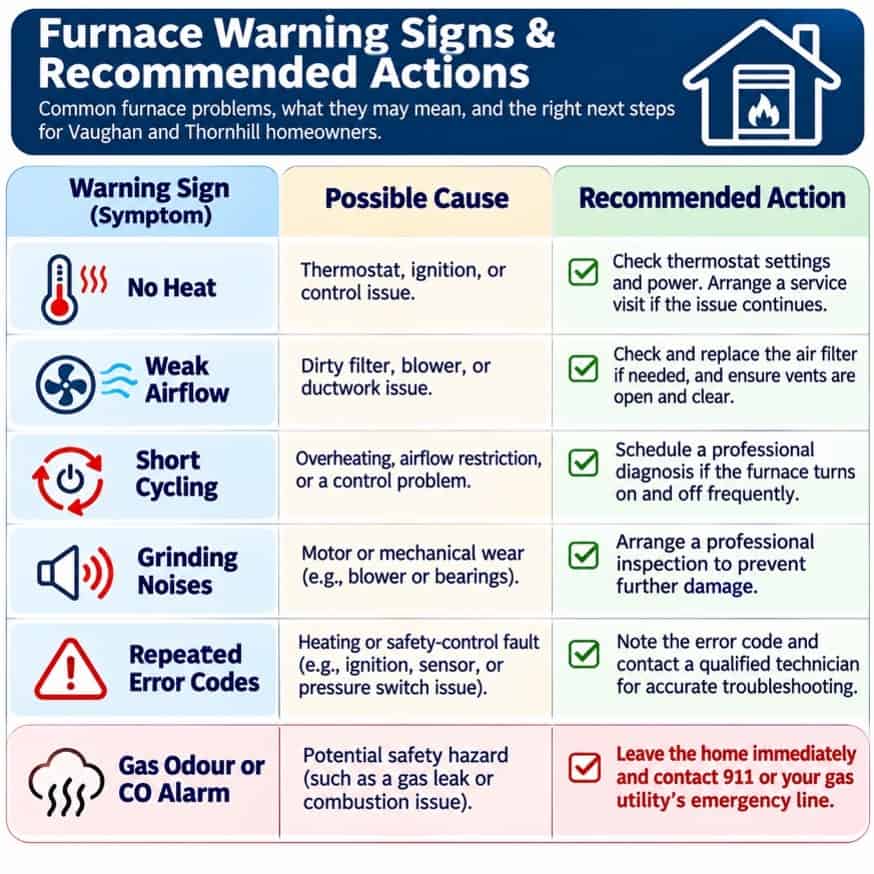
| Warning Sign | Possible Cause | Recommended Action |
| No heat | Thermostat, ignition, or control issue | Check basic settings; arrange service if unresolved |
| Weak airflow | Dirty filter, blower, or ductwork issue | Check filter and vents; request inspection if persistent |
| Short cycling | Overheating, airflow, or control problem | Schedule diagnosis if recurring |
| Grinding noises | Motor or mechanical wear | Arrange professional inspection |
| Repeated error codes | Heating or safety-control fault | Record the code and contact a technician |
| Gas odour or CO alarm | Potential safety hazard | Evacuate and contact emergency authorities |
Furnace Not Heating Your Home Properly?
ALP Heating Services provides residential furnace repair in Thornhill, Vaughan, and surrounding GTA communities. Get professional help identifying heating problems and determining the appropriate repairs.
[REQUEST FURNACE REPAIR SERVICE]
How Furnace Problems Affect Heating Costs and Efficiency
Furnace problems can influence more than indoor comfort. Certain malfunctions may increase energy consumption, accelerate equipment wear, and lead to additional repair expenses.
Restricted Airflow Can Increase System Strain
When air cannot circulate properly, the furnace may struggle to distribute heated air throughout the home.
Dirty filters, obstructed ducts, and failing blower components can contribute to restricted airflow.
In some circumstances, this may cause overheating or repeated safety shutdowns.
Addressing these problems can help restore normal operation and reduce unnecessary strain on the equipment.
Short Cycling Can Affect Operating Efficiency
A furnace that repeatedly starts and stops may consume energy without maintaining consistent temperatures.
Excessive cycling also increases the number of ignition and motor start-up events, potentially contributing to component wear.
Correcting the underlying problem can help the furnace operate more consistently.
Delaying Repairs May Increase Long-Term Expenses
Some furnace problems become more expensive when ignored.
For example, continued operation with restricted airflow may contribute to overheating, while deteriorating blower components may eventually stop functioning altogether.
Timely servicing can help identify the cause of these issues before additional components are affected.
However, not every heating problem leads to higher energy bills. A professional assessment is necessary to determine whether a specific malfunction is affecting efficiency.
When to Schedule Professional Furnace Repair
Homeowners can perform certain routine checks, but persistent heating problems require qualified diagnosis.
If your furnace fails to provide adequate heat, produces unusual noises, or repeatedly shuts down, scheduling professional service is the safest approach.
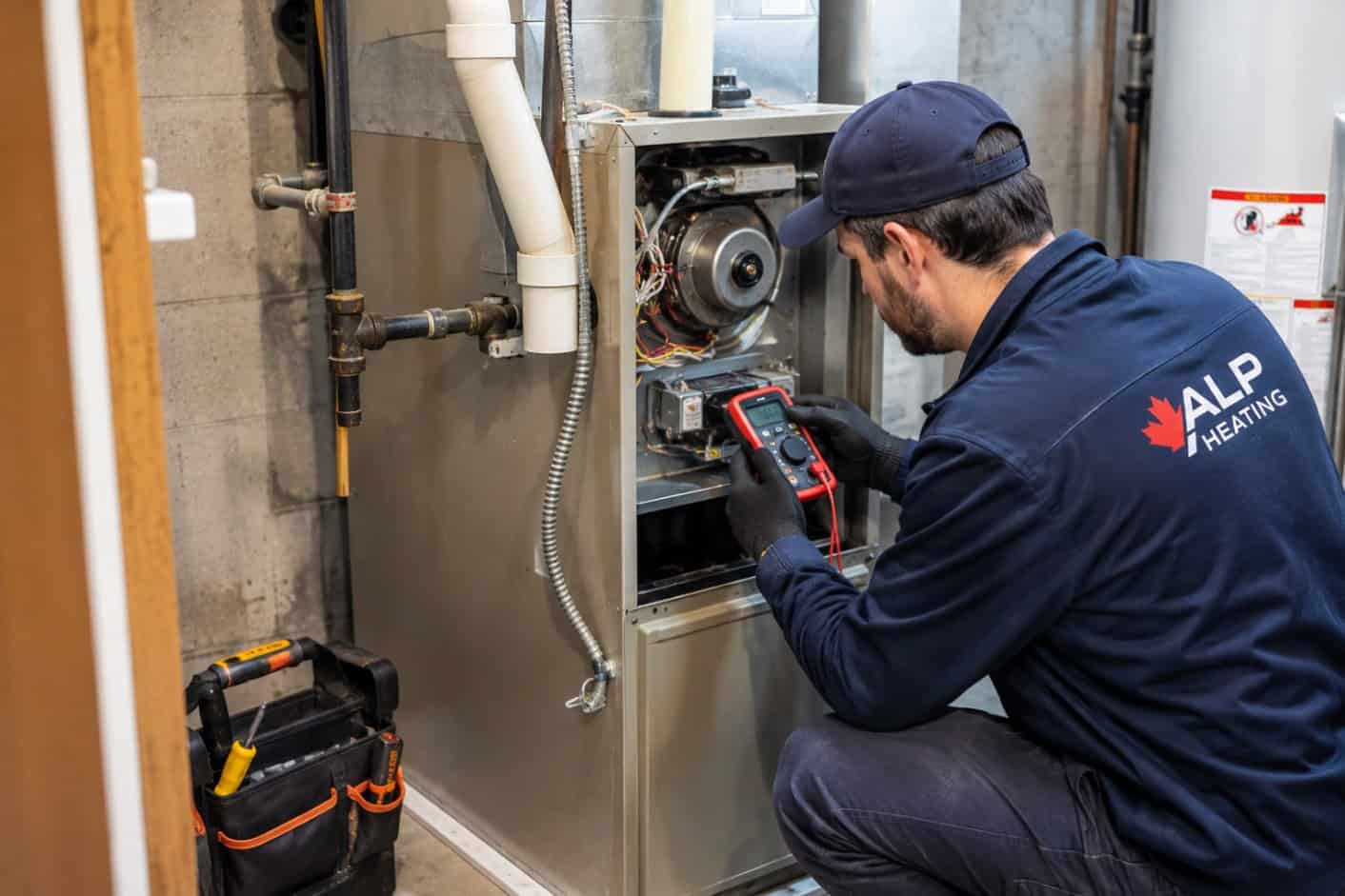
What Does a Furnace Technician Check?
A professional furnace inspection may include:
- Reviewing the thermostat and heating controls.
- Checking airflow and blower operation.
- Inspecting ignition components and burner performance.
- Evaluating relevant safety controls.
- Examining accessible venting and combustion-related components.
- Identifying faulty parts and explaining recommended repairs.
The exact diagnostic process depends on the reported symptoms, equipment model, and condition of the system.
Why Professional Diagnosis Matters
Several furnace problems share similar symptoms.
For instance, a system that shuts down shortly after starting may have an ignition issue, overheating problem, or safety-control fault.
A qualified technician can investigate the relevant components rather than relying on assumptions.
Ontario’s Technical Standards and Safety Authority requires regulated gas appliance servicing to be performed by appropriately certified technicians working for registered contractors.
Choosing a qualified provider helps ensure that furnace repairs are completed according to applicable safety requirements.
Should You Repair or Replace an Older Furnace?
Furnace replacement isn’t always necessary when a problem develops.
A relatively new system with a faulty component may be economical to repair.
However, homeowners may want to compare repair and replacement options when the equipment is approaching the end of its expected service life, requires repeated repairs, or no longer provides reliable heating.
A professional assessment should consider furnace age, repair costs, equipment condition, and overall heating performance before recommending replacement.
Preventive Maintenance Tips for Vaughan and Thornhill Homeowners
Routine furnace maintenance helps reduce the likelihood of unexpected heating problems and supports reliable operation during the winter.
Although maintenance cannot prevent every component failure, it can identify developing issues before they become more disruptive.
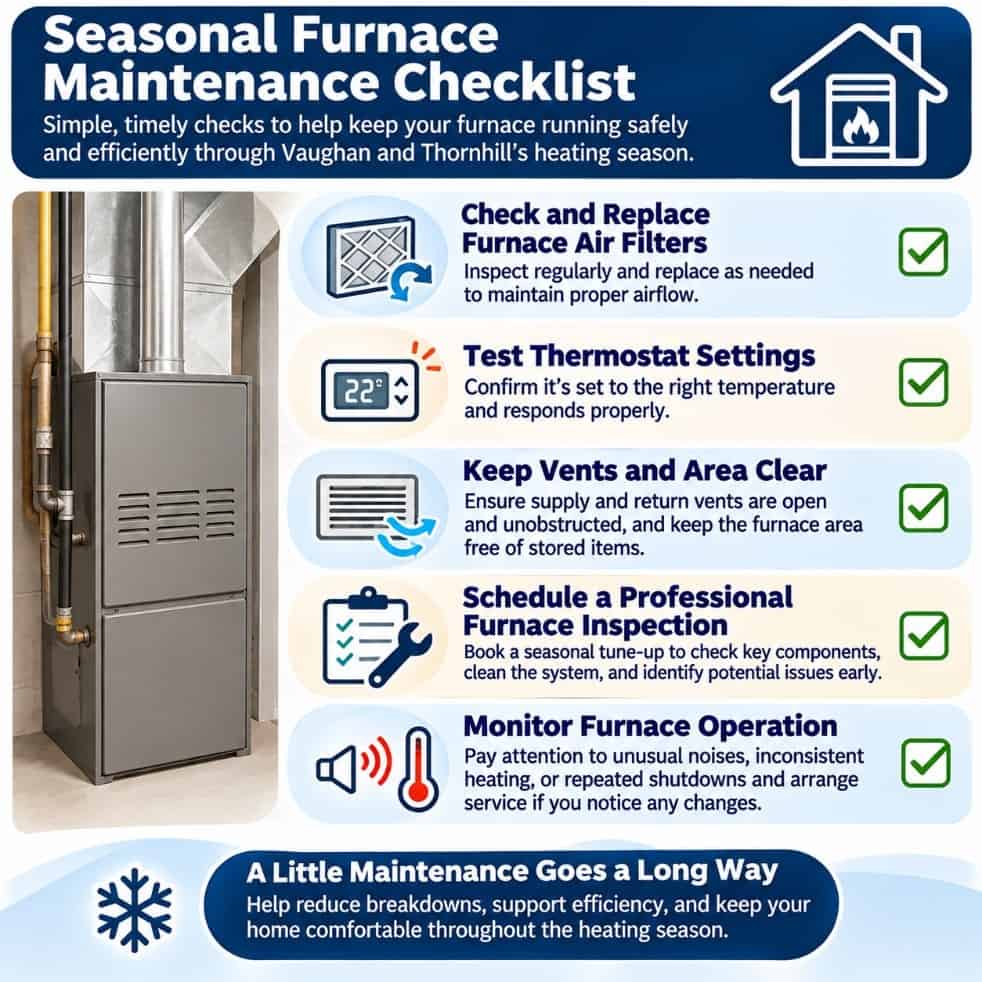
Replace or Clean Furnace Filters Regularly
Dirty filters restrict airflow and can cause the heating system to work harder than necessary.
Check the filter according to the manufacturer’s recommendations, and replace or clean it as required.
Homes with pets, higher dust levels, or frequent furnace use may need more frequent attention.
Always use a filter compatible with the system’s airflow requirements.
Schedule Seasonal Furnace Inspections
Scheduling a professional furnace inspection before the heating season can help identify worn components, airflow restrictions, and potential operating problems.
A technician can evaluate safety controls, combustion performance, blower operation, and other relevant components.
This preventive approach helps homeowners prepare their heating systems before prolonged cold weather increases demand.
Keep Vents and Furnace Surroundings Clear
Make sure furniture, rugs, and other objects don’t obstruct supply or return-air openings.
Keep the area around the furnace free of stored items that could interfere with required access or clearances.
Where outdoor intake and exhaust terminals are present, follow the manufacturer’s guidance and keep their openings clear of snow and debris without dismantling any equipment.
Pay Attention to Changes in Heating Performance
Unusual noises, inconsistent room temperatures, and increasing heating difficulties may indicate developing problems.
Rather than waiting until the furnace stops working altogether, document the symptoms and arrange an inspection when necessary.
Homeowners may find it useful to record error codes, note when noises occur, and describe how the system behaves during heating cycles.
These details can help technicians identify the source of the problem more efficiently.
Keep Your Home Comfortable with ALP Heating Services
Furnace problems can develop for several reasons, from clogged air filters and thermostat malfunctions to worn blower motors, ignition failures, and faulty heating controls.
Recognizing early warning signs can help homeowners avoid unnecessary discomfort and make informed decisions about professional repairs.
Whether your furnace is struggling to maintain comfortable temperatures, producing unusual noises, or shutting down unexpectedly, identifying the underlying cause is essential for restoring dependable heating.
ALP Heating Services provides residential furnace repair in Vaughan, Thornhill, and surrounding Greater Toronto Area communities. Its qualified technicians help homeowners diagnose heating problems, evaluate equipment condition, and determine appropriate repair solutions.
Need Furnace Repair in Vaughan or Thornhill?
Don’t let recurring furnace problems affect your home’s comfort throughout the heating season.
Contact ALP Heating Services to discuss your heating concerns and arrange a professional residential furnace inspection.
[REQUEST YOUR FURNACE REPAIR SERVICE]
Call (647) 972-8714 or submit a service request through the ALP Heating website.
Frequently Asked Questions About Furnace Problems in Vaughan and Thornhill
1. What are the most common furnace problems in Vaughan and Thornhill homes?
Common residential furnace problems include insufficient heat, restricted airflow, frequent shutdowns, ignition failures, unusual noises, and malfunctioning thermostats. These issues may result from dirty filters, aging components, electrical faults, or inadequate maintenance. A qualified technician can inspect the heating system to identify the cause and recommend appropriate repairs.
2. Why does my furnace heat some rooms but leave others cold?
Uneven heating may result from blocked vents, ductwork leaks, poor airflow balancing, inadequate insulation, or blower motor problems. In multi-storey homes, differences in heat loss and airflow distribution can make certain rooms harder to heat. Professional inspection can determine whether the issue involves the furnace itself or the home’s air distribution system.
3. Why does my furnace keep shutting off before reaching the thermostat temperature?
A furnace may shut down prematurely because of restricted airflow, overheating, ignition problems, or malfunctioning safety controls. A dirty air filter is one possible cause, but repeated shutdowns may indicate a more complex issue. If basic maintenance doesn’t resolve the problem, a qualified technician should diagnose the system.
4. Can an older furnace still be repaired, or is replacement necessary?
An older furnace can often be repaired if the problem is limited to a serviceable component and the equipment remains in reasonable condition. Replacement may be worth considering when the system requires frequent expensive repairs, operates inefficiently, or has significant safety or reliability problems. A professional assessment can help determine the most practical option.
5. How often should homeowners schedule furnace maintenance in Vaughan and Thornhill?
Homeowners should generally arrange professional furnace maintenance once a year, preferably before the winter heating season. Annual servicing helps identify worn components, assess safe operation, and address issues affecting airflow and heating performance. Air filters should also be checked regularly and replaced according to manufacturer recommendations.
6. Does ALP Heating provide furnace repair in Thornhill?
Yes. ALP Heating Services provides residential furnace repair in Thornhill and surrounding communities. Its technicians can diagnose common heating problems, including ignition failures, blower motor issues, abnormal furnace noises, and inconsistent heating. Homeowners can contact ALP Heating to discuss their furnace symptoms and arrange a service appointment.
7. Can ALP Heating repair furnaces that keep shutting down or displaying error codes?
Yes. ALP Heating provides furnace diagnostics for residential heating systems experiencing repeated shutdowns, ignition failures, and diagnostic error codes. Its technicians can inspect relevant heating controls and components to identify the underlying problem. Once the issue is diagnosed, they can explain the recommended repair options and associated work.
8. Does ALP Heating service different residential furnace brands?
Yes. ALP Heating services residential furnaces from major manufacturers, including Lennox, Carrier, Trane, Goodman, York, and Daikin. Repair requirements vary by brand, furnace model, and component availability. Homeowners can provide their furnace’s make and model when requesting service so the company can review the equipment and confirm the next steps.
9. Can ALP Heating help prevent recurring furnace problems?
Yes. ALP Heating provides residential furnace maintenance and repair services designed to identify developing equipment issues and support reliable heating performance. Its technicians can inspect components, evaluate airflow, and recommend maintenance or repairs based on the system’s condition. Regular servicing may help reduce recurring problems and extend equipment service life.
10. How can I schedule furnace repair in Vaughan or Thornhill with ALP Heating?
Homeowners can request furnace repair in Vaughan or Thornhill by calling ALP Heating Services at (647) 972-8714 or submitting a service inquiry through its website. Providing the furnace brand, a description of the problem, and any visible error codes can help the team understand the issue. Appointment availability can be confirmed when scheduling.